
 Get Pre-Qualified
 603.485.4205
  24/7 Emergency Service Request
 Indoor Air Quality in Winter: How to Fix Stuffy Air in Your NH Home
Your home is sealed tight for winter—and that’s great for comfort and heating bills. But in February, many New Hampshire homes are “buttoned up,” which means you’re breathing the same air over and over. Indoor air can build up dust, odors, moisture issues, and invisible pollutants—and in some cases, it can even affect how you feel day to day. The EPA notes that concentrations of some indoor pollutants are often 2–5x higher than outdoor air.
If your home has been feeling stale, dusty, or you’re waking up with headaches or congestion, it may be time to look at your indoor air quality (IAQ).
Signs Your Indoor Air Quality Is Suffering This Winter
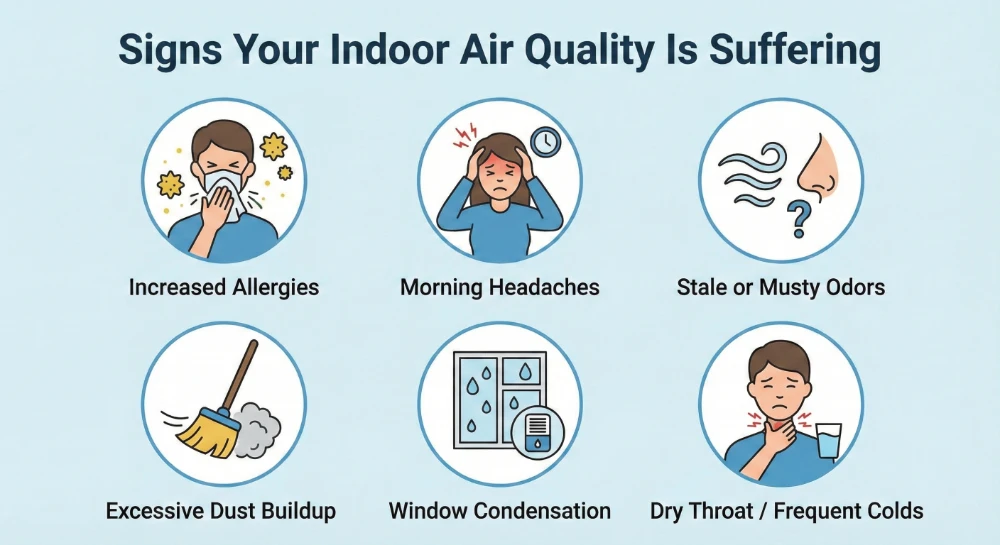
Watch for these common “tight home” red flags:
- Increased allergy or asthma symptoms
- Morning headaches, grogginess, or fatigue
- Stale or musty odors
- Excessive dust buildup
- Window condensation / damp basement smells
- Dry throat, itchy eyes, frequent colds
Why Winter Makes IAQ Worse in New Hampshire
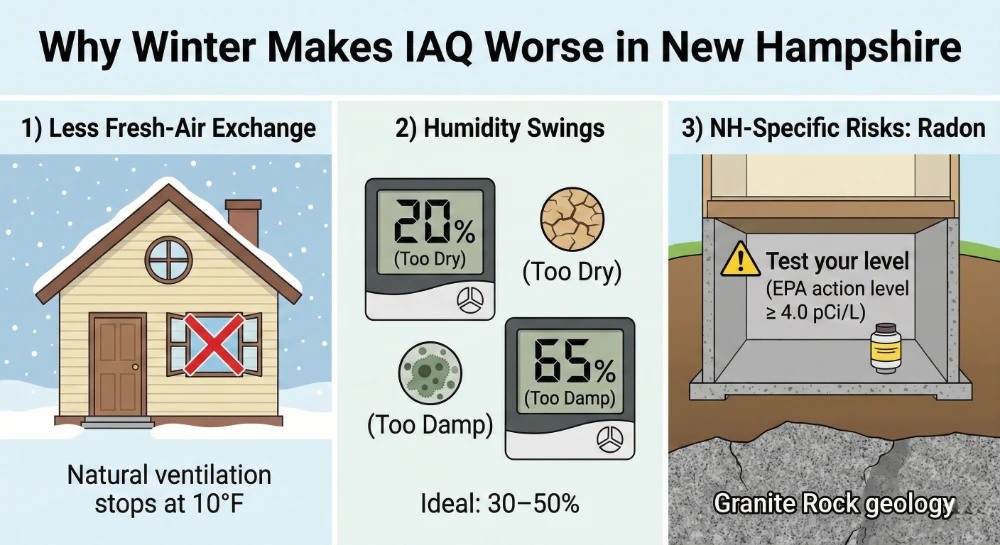
1) Less fresh-air exchange (because nobody wants the windows open)
When it’s 10°F out, natural ventilation basically stops. Everyday living—cooking, showering, cleaning products, pets—adds particles and gases that can linger.
2) Humidity swings (too dry or too damp)
Humidity matters more than most people realize. The EPA recommends keeping indoor relative humidity below 60%—ideally 30–50% to help reduce mold growth and discourage dust mites.
In winter, some homes drop too dry (irritated sinuses), while others trap moisture too high (condensation, musty odors).
3) NH-specific risks: radon + winter “stack effect”
New Hampshire’s granite geology makes radon a real concern—and the only way to know your level is to test.
EPA recommends taking action if your radon level is 4.0 pCi/L or higher.
4) Don’t ignore “flu-like” symptoms that could be CO
Carbon monoxide (CO) is odorless and dangerous. The CDC lists common CO poisoning symptoms as headache, dizziness, weakness, upset stomach/vomiting, chest pain, confusion—often described as “flu-like.”
If multiple people feel sick at home and improve when they leave, take it seriously and get to fresh air immediately.
Quick DIY IAQ Check You Can Do This Week
- Check humidity with an inexpensive hygrometer (aim for that 30–50% zone).
- Replace your HVAC filter (and make sure it fits snugly—no gaps).
- Look for moisture clues: condensation, basement dampness, musty odors.
- Test for radon (especially if you have a basement or lower-level living space).
- Confirm you have working CO detectors on each level of the home.
Whole-Home IAQ Upgrades That Make a Big Difference
If you want a real “set it and forget it” improvement, these are the upgrades homeowners love in winter:
✅ Advanced whole-home air cleaning (beyond a basic filter)
Standard filters help protect equipment, but they don’t always tackle fine particles and odors well—especially in a sealed home. A whole-home air cleaner with strong particle capture + odor control can noticeably reduce dust and “stale air.”
✅ Humidification (when the air is painfully dry)
Balanced humidity can improve comfort and help your home feel warmer at the same thermostat setting.
✅ Ventilation solutions for tight homes
If your house has been weatherized heavily, controlled ventilation (done the right way) can bring in fresh air without making the home drafty.
✅ Duct cleaning or targeted fixes (when needed)
Not every home needs duct cleaning, but if you’ve had renovations, smoke issues, pets, or heavy dust, it can be part of the puzzle.
When to Call a Pro
If you’re dealing with persistent odors, heavy dust, recurring headaches, moisture problems, or you just want a clear plan, it’s worth having a pro evaluate your system and your home’s “air loop.”
At Al Terry Plumbing & Heating, we install IAQ solutions designed for winter comfort in New Hampshire—so your home stays warm and the air feels clean.
More Practical Home Advice You Can Trust
Our homes face unique challenges in New Hampshire’s climate. These articles break down heating, plumbing, and electrical topics in plain language—helping you understand what matters, what can wait, and how to protect your home through every season.
Well Water Season: Should Your NH Home Get a Summer Water Test?
For many New Hampshire homeowners, well water is part of everyday life. You turn on the tap, fill a glass, run the shower, water the garden, and assume the water coming from your private well is safe. But unlike town or city water, private wells are not monitored by a municipal water department. That responsibility…
Why Your Home Feels Sticky When It Is Not Hot Outside
New Hampshire weather has a way of confusing your home’s comfort system One day it is cool enough to leave the windows closed. The next day the house feels damp, sticky, and uncomfortable — even though the thermostat says it is only 68 or 70 degrees inside. That is one of the most common shoulder-season…

Why Your Upstairs Is Always Hotter Than the Living Room
If you own a two-story Colonial in southern New Hampshire, this may sound familiar: The living room feels fine. The thermostat says the AC is working. But the upstairs bedrooms are still warm, sticky, and uncomfortable. By bedtime, the second floor can feel 6, 8, or even 10 degrees hotter than the first floor. The…

Ductless Mini-Splits for Older NH Homes Without Ductwork
Older New Hampshire homes have a lot of character. They also have a comfort challenge. Many Colonials, Capes, farmhouses, and mid-century homes were built around boilers, radiators, or hot-water baseboard heat. Those systems can keep a home warm, but they were not designed for central air conditioning. In many older homes, there simply is not…
Outdoor GFCI Outlets: Why Weatherproof Protection Matters for NH Homes
Outdoor power is something most homeowners use without thinking much about it. You plug in holiday lights. Run a power washer. Charge yard tools. Power patio speakers. Use landscape lighting. Maybe you have an outdoor kitchen, pool equipment, irrigation controls, or smart devices around the house. But outdoor electricity has to deal with conditions indoor…
Why NH Pollen Is Hitting Your HVAC System Harder This Year
If it feels like pollen season is worse than usual this spring, you’re not imagining it. Across New Hampshire, homeowners are dealing with heavy tree pollen from oak, maple, and ash. Most people think of pollen as an allergy problem. Sneezing, itchy eyes, congestion. But what many homeowners do not realize is that pollen can…
Should You Shut Your Boiler Off for Spring in NH?
When the weather starts warming up in New Hampshire, a lot of homeowners start asking the same question: Should I shut my boiler off for the season, or leave it running? The honest answer is that it depends on your system. For many homes, mid-to-late April is the right time to stop using the heating…

Tired of High Electric Bills in Southern NH? Start With These Smart Upgrades
If your electric bill in Southern New Hampshire has been climbing, you are not imagining it. Between high regional electricity costs, older homes that leak heated or cooled air, and HVAC systems working harder than they should, many homeowners are paying more every month than necessary. The good news is that lowering your bill does…
Low Water Pressure in Spring? 5 Plumbing Problems NH Homeowners Shouldn’t Ignore
When spring finally shows up in New Hampshire, most homeowners are ready to open windows, clean up the yard, and put winter behind them. But for your plumbing system, spring can be one of the toughest times of year. As frost leaves the ground, snowmelt saturates the soil, municipal crews begin hydrant flushing, and aging…

How Your HVAC and Plumbing Systems Can Help Fight Spring Allergies
Spring is a welcome change in Southern New Hampshire. The snow melts, the windows start to open, and the air finally feels lighter. But for many homeowners, spring also brings sneezing, congestion, itchy eyes, and poor indoor air quality. Most people think of spring allergies as an outdoor problem. In reality, your home’s HVAC and…

Our Commitment to Your
PEACE OF MIND
5-year warranty on all new installations
AND 2-year warranty on all repairs!