
 Get Pre-Qualified
 603.485.4205
  24/7 Emergency Service Request
 Tired of High Electric Bills in Southern NH? Start With These Smart Upgrades
If your electric bill in Southern New Hampshire has been climbing, you are not imagining it. Between high regional electricity costs, older homes that leak heated or cooled air, and HVAC systems working harder than they should, many homeowners are paying more every month than necessary.
The good news is that lowering your bill does not always mean starting with a major renovation. In many homes, the best results come from tackling the basics first, then moving toward bigger upgrades once the house is ready.
1. Start with HVAC maintenance
This is the simplest place to begin, and one of the most overlooked.
A dirty air filter can make an air conditioner use 5% to 15% more energy, and a neglected system can work far harder than it should. Dirty coils, incorrect refrigerant charge, and worn electrical components can all reduce efficiency, increase utility costs, and shorten the life of your equipment.
For homeowners, that means a basic service visit can do more than improve comfort. It can help your system cool and heat more efficiently, reduce wear and tear, and lower the risk of an expensive breakdown during the hottest or coldest days of the year.
If you have not changed your filter recently or had your system checked in the last year, scheduling a seasonal tune-up is the easiest first upgrade you can make.
2. Add a smart thermostat
Once your system is running properly, the next smart step is better control.
Smart thermostats can help reduce heating and cooling costs by adjusting automatically based on schedule, temperature patterns, and household usage. They help homeowners avoid wasting energy heating or cooling an empty home, and they give you better visibility into how your system is performing.
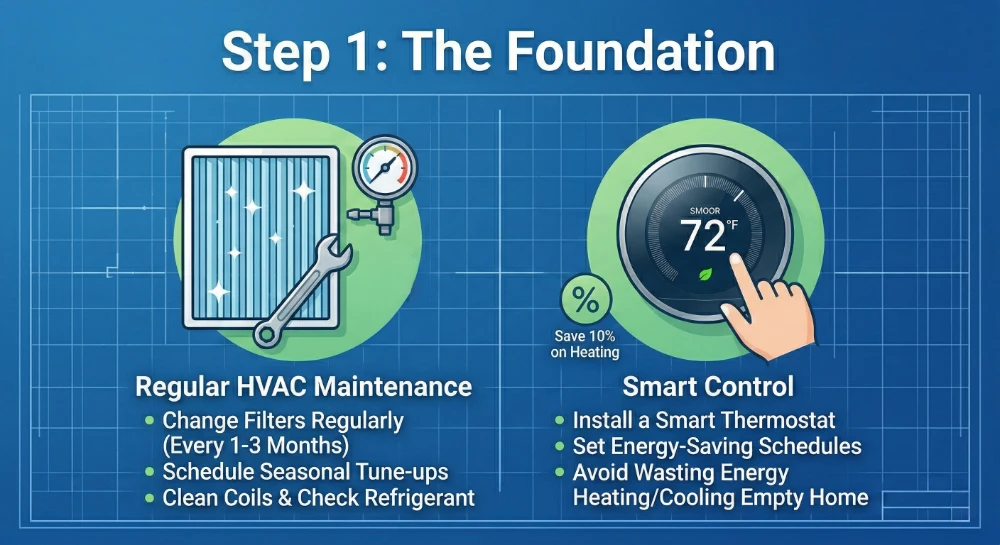
For many Southern New Hampshire homeowners, this is an affordable upgrade that can support both comfort and long-term savings.
3. Seal air leaks and improve insulation before replacing equipment
This is where many people get it backward.
A lot of Southern New Hampshire homes were built long before modern energy standards. Older Colonials, Capes, and similar homes often have limited insulation, leaky framing, and significant heat loss. That means even high-efficiency heating and cooling equipment will struggle if the home itself is wasting energy.
Before jumping into a major HVAC replacement, it often makes more sense to tighten the building envelope first. Air sealing and insulation improvements can help keep conditioned air inside, reduce how hard your system has to work, and improve comfort in every season.
4. Take advantage of an NHSaves home energy assessment
For many New Hampshire homeowners, this is one of the smartest first calls to make.
An NHSaves Home Performance with ENERGY STAR assessment can identify where your home is losing energy and help you prioritize the right upgrades. It can also open the door to valuable rebates for insulation and air sealing work, making larger efficiency improvements far more affordable.
That is important because it helps reduce the upfront cost of the upgrades that often make the biggest long-term difference.
5. Consider a cold-climate heat pump when the home is ready
Heat pumps can be a strong option in Southern New Hampshire, especially in homes that currently rely on expensive fuels like oil or propane. Modern cold-climate systems are built to perform in low outdoor temperatures and can deliver meaningful savings in the right home.
But here is the key point: a heat pump is not always the first step. If the house is drafty and under-insulated, the system may have to work too hard, which can lead to disappointing comfort and high winter electric bills. That is why weatherization should come first, or at least happen alongside the upgrade.
Once the home is ready, a properly sized and installed heat pump can be one of the smartest long-term energy upgrades available.
6. Do not forget your water heater
Your plumbing system can play a major role in energy costs too.
If you have a standard electric water heater, upgrading to a heat pump water heater can dramatically reduce the electricity needed to produce hot water. These systems are highly efficient, and in New Hampshire they may also qualify for valuable rebates.
For homeowners looking to cut electric bills without sacrificing comfort, this is one of the strongest plumbing-related upgrades to consider.
7. Make sure your electrical panel is ready for modern upgrades
Here is one step many homeowners do not think about until the project is already underway.
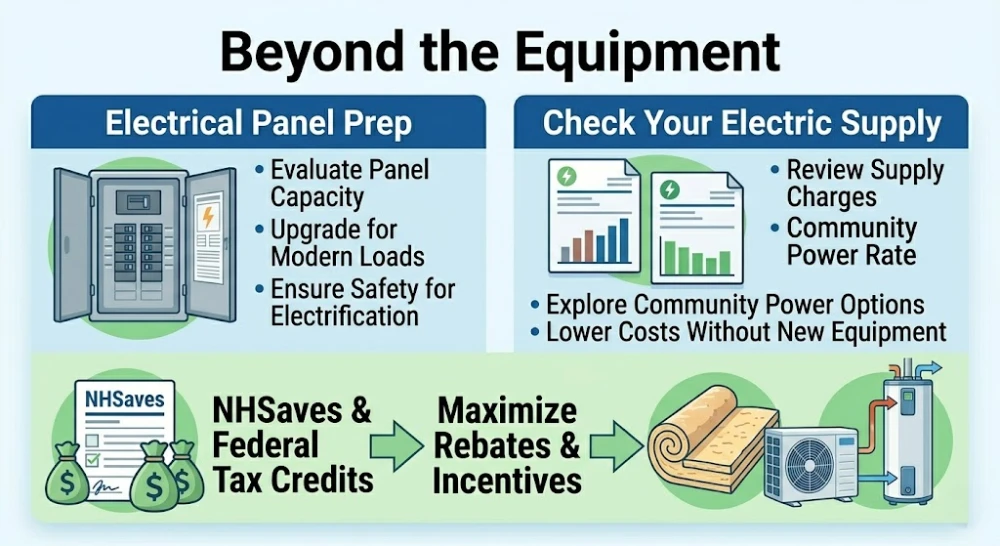
If you are switching from fossil fuels to high-efficiency electric equipment like a heat pump or heat pump water heater, your home may need an electrical panel upgrade to handle the added load safely. A licensed electrician can evaluate whether your current panel has the capacity for today’s high-efficiency systems and any future upgrades you may be considering.
Taking care of this step early can prevent delays and help your project move forward smoothly.
8. Do not ignore the supply side of your electric bill
Not every savings opportunity is inside the home.
In New Hampshire, your electric bill includes both delivery charges and supply charges. Depending on where you live, community power programs may offer a better supply rate than the default utility option. In some Southern New Hampshire towns, checking your supply choice can be a worthwhile step that helps lower costs without changing any equipment at all.
It is not as exciting as a new system, but it can still save money.
The smartest order to tackle upgrades
If your goal is to lower electric bills without wasting money, the most practical sequence looks like this:
Start with HVAC maintenance. Then improve control with a smart thermostat. Next, seal leaks and add insulation. After that, evaluate larger upgrades like a heat pump or heat pump water heater. Along the way, make sure your electrical panel can support those changes. Finally, review your electric supply rate to make sure you are not overpaying on the utility side.
That order matters because it helps each upgrade perform the way it is supposed to.
How Al Terry can help
The challenge for many homeowners is not knowing which upgrade to do first or how to make sure everything works together.
That is where working with one trusted local team can make a big difference. Whether you need HVAC maintenance, help evaluating a heat pump installation, a plumbing upgrade like a heat pump water heater, or an electrical panel assessment before major electrification, Al Terry can help you take the next step with confidence.
Final thoughts
High electric bills in Southern New Hampshire are frustrating, but they are not untouchable. The biggest mistake homeowners make is jumping straight to expensive equipment without fixing the underlying inefficiencies first. The smarter move is to start with the upgrades that reduce waste right away, prepare the home for better performance, and take advantage of available incentives where possible.
In most cases, the path to lower energy costs is not one dramatic change. It is a series of smart ones.
Ready to start lowering your energy bills? Schedule seasonal HVAC maintenance, ask about heat pump and heat pump water heater options, or have Al Terry evaluate whether your electrical system is ready for your next upgrade.
More Practical Home Advice You Can Trust
Our homes face unique challenges in New Hampshire’s climate. These articles break down heating, plumbing, and electrical topics in plain language—helping you understand what matters, what can wait, and how to protect your home through every season.
Should You Shut Your Boiler Off for Spring in NH?
When the weather starts warming up in New Hampshire, a lot of homeowners start asking the same question: Should I shut my boiler off for the season, or leave it running? The honest answer is that it depends on your system. For many homes, mid-to-late April is the right time to stop using the heating…
Tired of High Electric Bills in Southern NH? Start With These Smart Upgrades
If your electric bill in Southern New Hampshire has been climbing, you are not imagining it. Between high regional electricity costs, older homes that leak heated or cooled air, and HVAC systems working harder than they should, many homeowners are paying more every month than necessary. The good news is that lowering your bill does…
Low Water Pressure in Spring? 5 Plumbing Problems NH Homeowners Shouldn’t Ignore
When spring finally shows up in New Hampshire, most homeowners are ready to open windows, clean up the yard, and put winter behind them. But for your plumbing system, spring can be one of the toughest times of year. As frost leaves the ground, snowmelt saturates the soil, municipal crews begin hydrant flushing, and aging…

How Your HVAC and Plumbing Systems Can Help Fight Spring Allergies
Spring is a welcome change in Southern New Hampshire. The snow melts, the windows start to open, and the air finally feels lighter. But for many homeowners, spring also brings sneezing, congestion, itchy eyes, and poor indoor air quality. Most people think of spring allergies as an outdoor problem. In reality, your home’s HVAC and…
Why March Is the Smartest Time to Service Your AC in New Hampshire
Why March Is the Smartest Time to Service Your AC in New Hampshire Most homeowners in New Hampshire do not think about air conditioning in March. They are still thinking about snowbanks, muddy driveways, and one more spike in the heating bill. But that is exactly why March is such a smart time to look…

Sump Pump Season Prep | Prevent Basement Flooding This Spring
Spring in Southern New Hampshire brings two things homeowners can count on: melting snow and heavy rain. That combination puts serious pressure on your home’s foundation, especially if water collects around the basement and your sump pump is not ready to handle it. Your sump pump is one of the most important lines of defense…
Water Heater Replacement in NH: Lifespan Check & Warning Signs
When homeowners think about “home protection,” they usually picture things like smoke detectors, sump pumps, or a backup generator. The water heater rarely makes the list—until it fails. And when a traditional tank-style water heater fails, it often fails big. A rupture can dump 40–80 gallons of water onto your basement floor in minutes, and…
Spring Maintenance in Southern NH: Get Ahead of the March Rush
Spring in Southern New Hampshire doesn’t ease in quietly. Snowmelt, early rainstorms, and rapid temperature swings can expose problems that stayed hidden all winter. March is the best time to schedule spring maintenance because your home is transitioning from winter protection to spring reactivation—and service calendars fill up quickly once consistent warm weather arrives. A…

Indoor Air Quality in Winter: How to Fix Stuffy Air in Your NH Home
Your home is sealed tight for winter—and that’s great for comfort and heating bills. But in February, many New Hampshire homes are “buttoned up,” which means you’re breathing the same air over and over. Indoor air can build up dust, odors, moisture issues, and invisible pollutants—and in some cases, it can even affect how you…

Valentine’s Day Home Love: Winter Maintenance Tips for NH Homes
Valentine’s Day is usually about taking care of the people you love. But the idea behind it—care, protection, and follow-through—translates surprisingly well to homeownership. In Southern New Hampshire, mid-February is when homes take the most punishment. Heating systems are running hard, plumbing is exposed to deep cold, and electrical panels are carrying heavy winter loads.…
Our Commitment to Your
PEACE OF MIND
5-year warranty on all new installations
AND 2-year warranty on all repairs!