
 Get Pre-Qualified
 603.485.4205
  24/7 Emergency Service Request
 Why NH Pollen Is Hitting Your HVAC System Harder This Year
If it feels like pollen season is worse than usual this spring, you’re not imagining it.
Across New Hampshire, homeowners are dealing with heavy tree pollen from oak, maple, and ash. Most people think of pollen as an allergy problem. Sneezing, itchy eyes, congestion. But what many homeowners do not realize is that pollen can also put real stress on your HVAC system.
At Al Terry Plumbing, Heating, Air & Electric, we think customers deserve to know what is happening inside their homes and inside their equipment. A bad pollen season does not just make the air feel uncomfortable. It can clog filters faster, coat sensitive components, reduce efficiency, and make your system work harder than it should.
It’s Not Just “Dust” Floating Through the Air
Tree pollen is especially tough on HVAC systems because it is sticky. Unlike ordinary household dust, pollen can cling to surfaces and build up over time. The research also points to something even more concerning: when pollen absorbs moisture, it can break into much smaller particles, sometimes small enough to move past basic filtration and deeper into the system.
That matters because spring in New Hampshire is not just pollen-heavy. It is also damp. When high humidity and pollen combine, your HVAC system can end up dealing with both visible debris and microscopic particles that are much harder to control.
Where the Trouble Starts
Your HVAC system is constantly moving air. That is its job. But during pollen season, that also means it is constantly pulling in airborne particles from around the home.
Pollen can enter through open doors, leaky windows, drafty areas in older homes, pets, clothing, and general air infiltration. Once it gets indoors, it does not just disappear. It gets drawn back into the return vents and recirculated through the system.
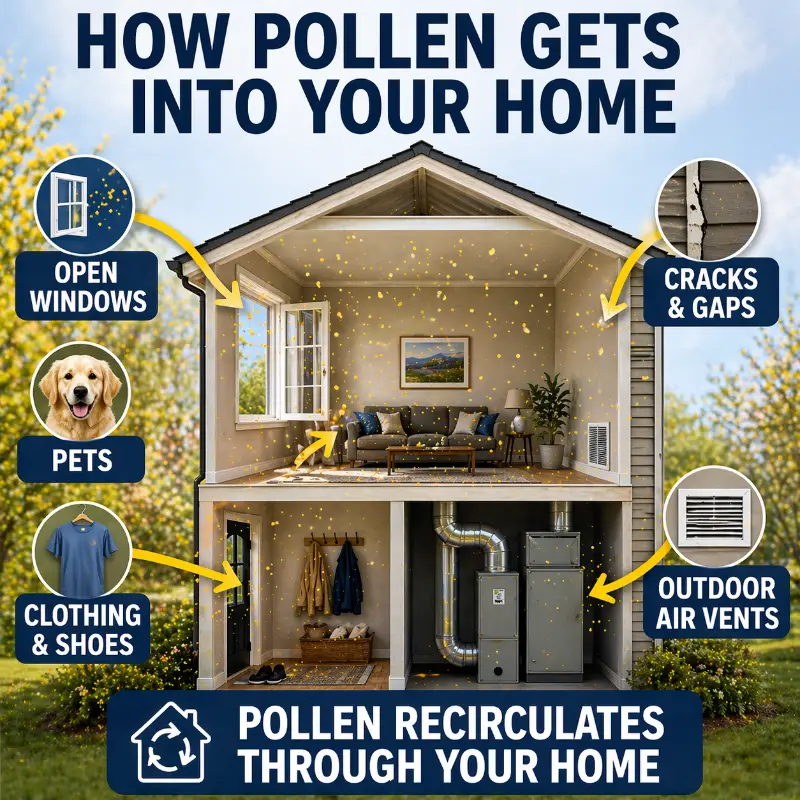
From there, problems can start building in a few key places:
1. The air filter
Your filter is the first line of defense. During a heavy pollen season, it can load up much faster than homeowners expect.
2. The evaporator coil
If particles get past the filter, they can stick to the damp indoor coil. Over time, that buildup can create a film that reduces heat transfer and makes the system less efficient. In plain English, your system has to run longer to do the same job.
3. The outdoor condenser
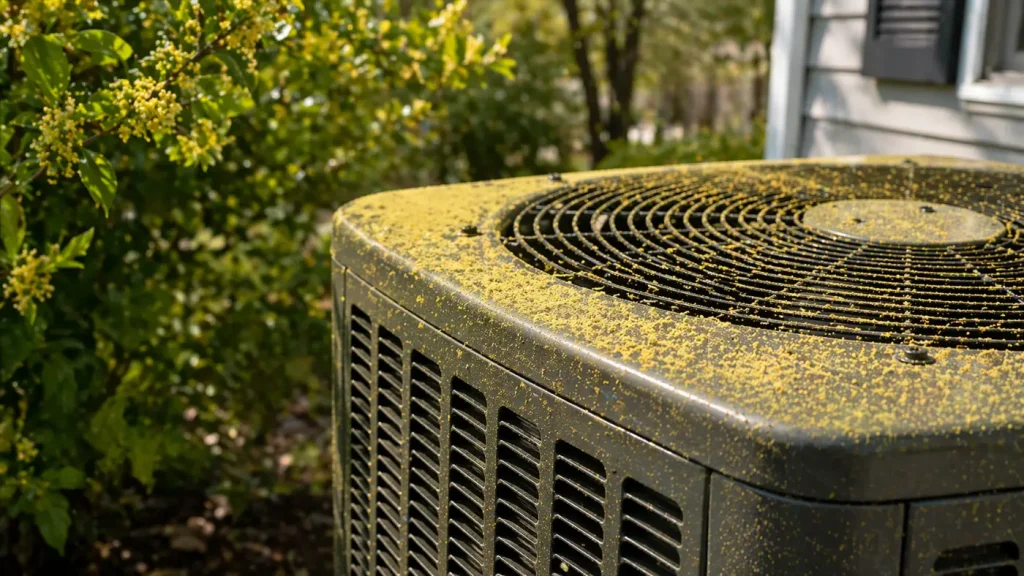
Pollen, seeds, and outdoor debris can also clog the fins on the outside unit. That blocks airflow and forces the system to operate under more strain, especially on warm days.
What This Means for Homeowners
A pollen-stressed HVAC system can create a chain reaction of issues:
- reduced airflow
- longer run times
- rising energy bills
- more wear on motors and other parts
- poorer indoor air quality
- more irritation for allergy and asthma sufferers
The research also found that even a relatively small amount of dirt, pollen, and sludge on a coil can cut efficiency by more than 20 percent, while replacing a badly clogged filter can reduce power use by 5 to 15 percent.
That is a big difference from a maintenance item many homeowners overlook.
Why Filter Choice Matters More Than Ever
Not all filters do the same job.
A standard pleated filter can catch a lot of larger pollen particles, but it may not do as well with the smaller particles created when pollen breaks down in humid conditions. At the same time, going too aggressive with filtration can backfire if your system is not designed for it. Dense filters can restrict airflow and make the blower work harder.
That is why there is no one-size-fits-all answer.
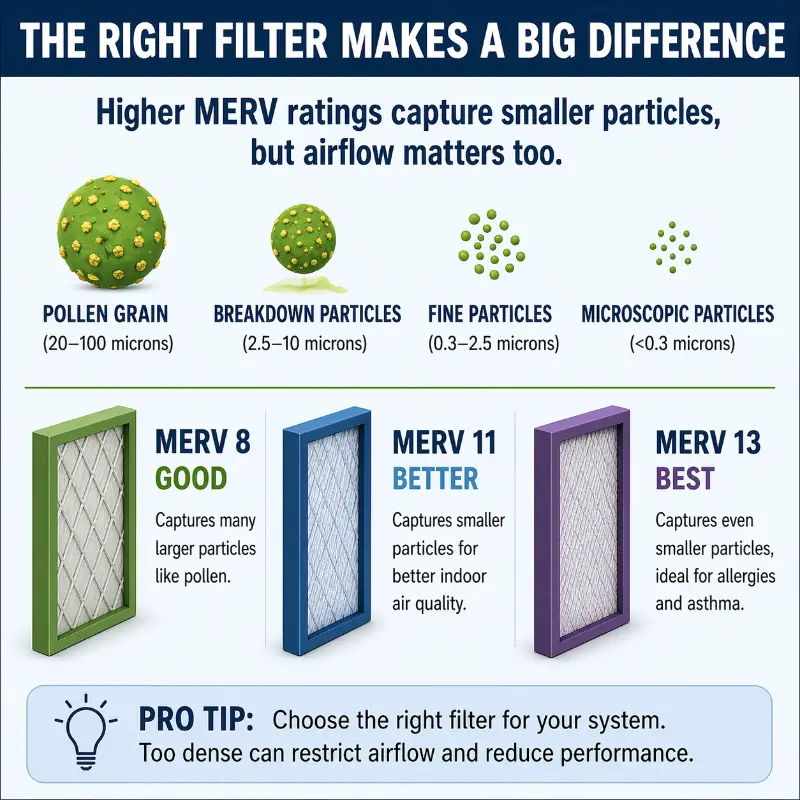
For some homes, a MERV 8 filter may be a solid baseline. For others, especially homes with allergy concerns, a MERV 11 or MERV 13 solution may make more sense. But the right choice depends on the equipment, duct design, and overall airflow requirements.
This is one area where professional guidance matters. A better filter is only better if your system can handle it properly.
How Often Should You Change Your Filter in Spring?
This is where many homeowners get caught off guard.
In a heavy New Hampshire pollen season, waiting 90 days to check your filter can be too long. The research recommends inspecting filters every 30 days during peak spring conditions. In some homes, especially those with pets, allergies, or lots of surrounding trees, 1-inch filters may need replacement every 30 to 60 days.
A simple rule: if the filter looks loaded and light does not pass through it well, it is time to replace it.
Signs Pollen May Be Affecting Your HVAC System
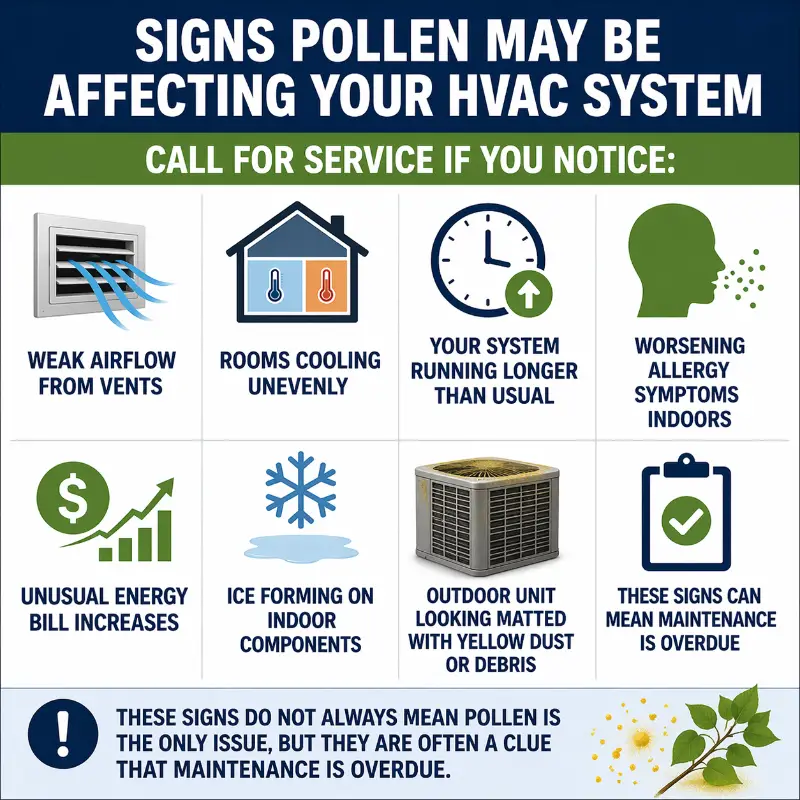
Call for service if you notice:
- weak airflow from vents
- rooms cooling unevenly
- your system running longer than usual
- worsening allergy symptoms indoors
- unusual energy bill increases
- ice forming on indoor components
- the outdoor unit looking matted with yellow dust or debris
These signs do not always mean pollen is the only issue, but they are often a clue that maintenance is overdue.
The Value of Spring HVAC Maintenance
This is exactly why seasonal maintenance matters.
A professional tune-up can help catch pollen-related buildup before it becomes a larger repair. That may include inspecting airflow, checking static pressure, cleaning coils where needed, clearing drains, and evaluating how the filter is performing under real operating conditions. The research also stresses that outdoor coil cleaning has to be done carefully. Using too much pressure can damage fins and make the problem worse.
In other words, this is not just about changing a filter. It is about making sure the whole system is ready for the cooling season ahead.
Better Indoor Air Quality Is Part of the Solution
If someone in your home struggles with allergies, asthma, or respiratory sensitivity, spring HVAC care is not just about comfort. It is about air quality.
The research notes that smaller pollen fragments and other indoor pollutants can worsen respiratory irritation and contribute to a more uncomfortable indoor environment. In some homes, add-on indoor air quality solutions like upgraded media filters, UV treatment, or air purification may be worth considering based on the system and household needs.
There May Be Rebates Available, Too
One more bright spot: homeowners may have access to NHSaves incentives in 2026 for certain qualifying efficiency and indoor air quality upgrades. The research specifically notes an $80 rebate for qualifying ENERGY STAR room air purifiers during part of 2026, along with other incentives tied to heating and cooling improvements.
That makes this a good time to ask not just, “What is broken?” but also, “What would make this home healthier and more efficient long-term?”
The Bottom Line
This spring’s pollen is doing more than making cars yellow and eyes itchy. It is putting extra pressure on home comfort systems across Southern New Hampshire.
The good news is that a few smart steps can make a real difference:
check filters more often, stay ahead of maintenance, and make sure your HVAC system is matched with the right filtration and airflow setup for your home.
If your home feels stuffy, your allergies seem worse indoors, or your AC is already struggling, it may be time to have it checked before summer heat arrives.
Need help getting your HVAC system ready for pollen season? Al Terry Plumbing, Heating, Air & Electric can inspect your system, improve airflow, and help you breathe easier this spring.
More Practical Home Advice You Can Trust
Our homes face unique challenges in New Hampshire’s climate. These articles break down heating, plumbing, and electrical topics in plain language—helping you understand what matters, what can wait, and how to protect your home through every season.
Why NH Pollen Is Hitting Your HVAC System Harder This Year
If it feels like pollen season is worse than usual this spring, you’re not imagining it. Across New Hampshire, homeowners are dealing with heavy tree pollen from oak, maple, and ash. Most people think of pollen as an allergy problem. Sneezing, itchy eyes, congestion. But what many homeowners do not realize is that pollen can…
Should You Shut Your Boiler Off for Spring in NH?
When the weather starts warming up in New Hampshire, a lot of homeowners start asking the same question: Should I shut my boiler off for the season, or leave it running? The honest answer is that it depends on your system. For many homes, mid-to-late April is the right time to stop using the heating…

Tired of High Electric Bills in Southern NH? Start With These Smart Upgrades
If your electric bill in Southern New Hampshire has been climbing, you are not imagining it. Between high regional electricity costs, older homes that leak heated or cooled air, and HVAC systems working harder than they should, many homeowners are paying more every month than necessary. The good news is that lowering your bill does…
Low Water Pressure in Spring? 5 Plumbing Problems NH Homeowners Shouldn’t Ignore
When spring finally shows up in New Hampshire, most homeowners are ready to open windows, clean up the yard, and put winter behind them. But for your plumbing system, spring can be one of the toughest times of year. As frost leaves the ground, snowmelt saturates the soil, municipal crews begin hydrant flushing, and aging…

How Your HVAC and Plumbing Systems Can Help Fight Spring Allergies
Spring is a welcome change in Southern New Hampshire. The snow melts, the windows start to open, and the air finally feels lighter. But for many homeowners, spring also brings sneezing, congestion, itchy eyes, and poor indoor air quality. Most people think of spring allergies as an outdoor problem. In reality, your home’s HVAC and…
Why March Is the Smartest Time to Service Your AC in New Hampshire
Why March Is the Smartest Time to Service Your AC in New Hampshire Most homeowners in New Hampshire do not think about air conditioning in March. They are still thinking about snowbanks, muddy driveways, and one more spike in the heating bill. But that is exactly why March is such a smart time to look…

Sump Pump Season Prep | Prevent Basement Flooding This Spring
Spring in Southern New Hampshire brings two things homeowners can count on: melting snow and heavy rain. That combination puts serious pressure on your home’s foundation, especially if water collects around the basement and your sump pump is not ready to handle it. Your sump pump is one of the most important lines of defense…
Water Heater Replacement in NH: Lifespan Check & Warning Signs
When homeowners think about “home protection,” they usually picture things like smoke detectors, sump pumps, or a backup generator. The water heater rarely makes the list—until it fails. And when a traditional tank-style water heater fails, it often fails big. A rupture can dump 40–80 gallons of water onto your basement floor in minutes, and…
Spring Maintenance in Southern NH: Get Ahead of the March Rush
Spring in Southern New Hampshire doesn’t ease in quietly. Snowmelt, early rainstorms, and rapid temperature swings can expose problems that stayed hidden all winter. March is the best time to schedule spring maintenance because your home is transitioning from winter protection to spring reactivation—and service calendars fill up quickly once consistent warm weather arrives. A…

Indoor Air Quality in Winter: How to Fix Stuffy Air in Your NH Home
Your home is sealed tight for winter—and that’s great for comfort and heating bills. But in February, many New Hampshire homes are “buttoned up,” which means you’re breathing the same air over and over. Indoor air can build up dust, odors, moisture issues, and invisible pollutants—and in some cases, it can even affect how you…
Our Commitment to Your
PEACE OF MIND
5-year warranty on all new installations
AND 2-year warranty on all repairs!