
 Get Pre-Qualified
 603.485.4205
  24/7 Emergency Service Request
 Indoor Air Quality in Winter: How to Fix Stuffy Air in Your NH Home
Your home is sealed tight for winter—and that’s great for comfort and heating bills. But in February, many New Hampshire homes are “buttoned up,” which means you’re breathing the same air over and over. Indoor air can build up dust, odors, moisture issues, and invisible pollutants—and in some cases, it can even affect how you feel day to day. The EPA notes that concentrations of some indoor pollutants are often 2–5x higher than outdoor air.
If your home has been feeling stale, dusty, or you’re waking up with headaches or congestion, it may be time to look at your indoor air quality (IAQ).
Signs Your Indoor Air Quality Is Suffering This Winter
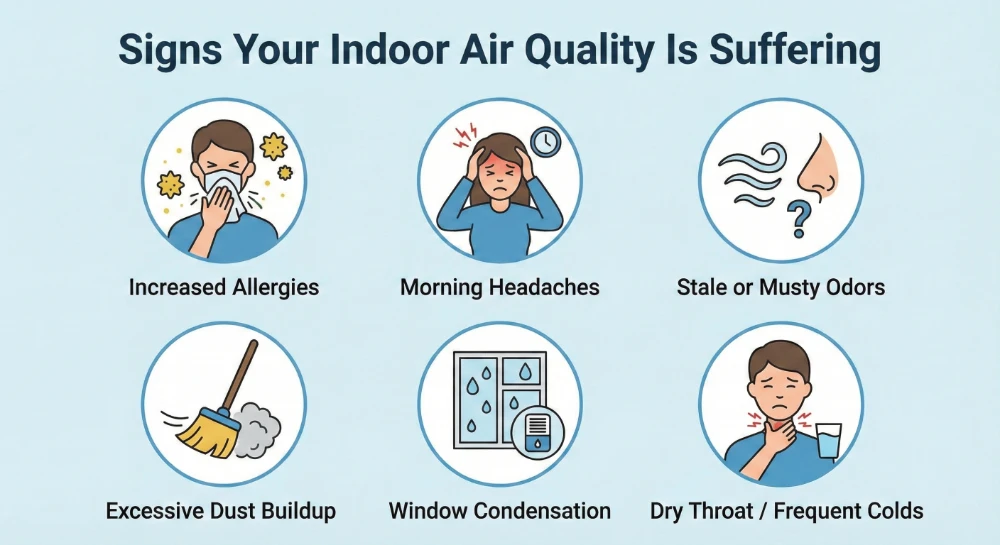
Watch for these common “tight home” red flags:
- Increased allergy or asthma symptoms
- Morning headaches, grogginess, or fatigue
- Stale or musty odors
- Excessive dust buildup
- Window condensation / damp basement smells
- Dry throat, itchy eyes, frequent colds
Why Winter Makes IAQ Worse in New Hampshire
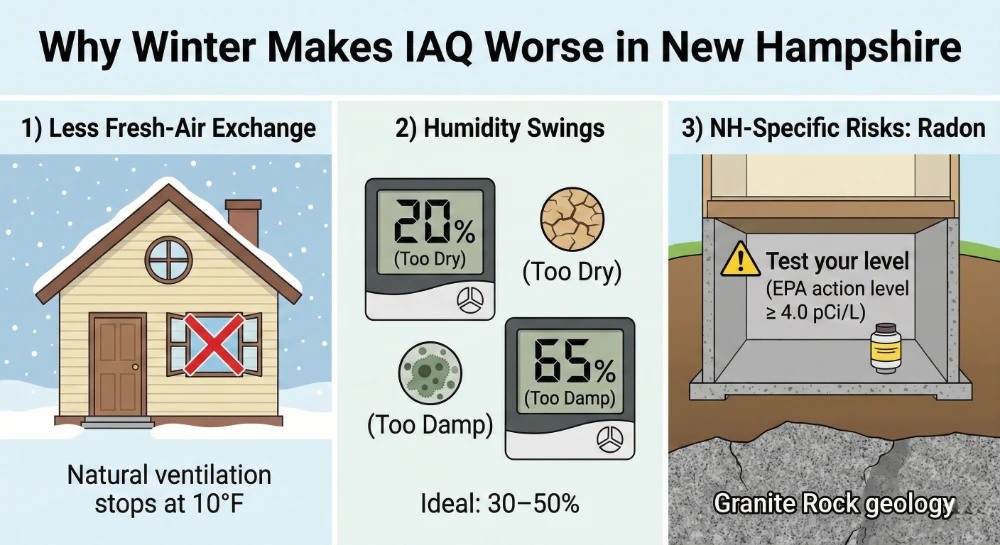
1) Less fresh-air exchange (because nobody wants the windows open)
When it’s 10°F out, natural ventilation basically stops. Everyday living—cooking, showering, cleaning products, pets—adds particles and gases that can linger.
2) Humidity swings (too dry or too damp)
Humidity matters more than most people realize. The EPA recommends keeping indoor relative humidity below 60%—ideally 30–50% to help reduce mold growth and discourage dust mites.
In winter, some homes drop too dry (irritated sinuses), while others trap moisture too high (condensation, musty odors).
3) NH-specific risks: radon + winter “stack effect”
New Hampshire’s granite geology makes radon a real concern—and the only way to know your level is to test.
EPA recommends taking action if your radon level is 4.0 pCi/L or higher.
4) Don’t ignore “flu-like” symptoms that could be CO
Carbon monoxide (CO) is odorless and dangerous. The CDC lists common CO poisoning symptoms as headache, dizziness, weakness, upset stomach/vomiting, chest pain, confusion—often described as “flu-like.”
If multiple people feel sick at home and improve when they leave, take it seriously and get to fresh air immediately.
Quick DIY IAQ Check You Can Do This Week
- Check humidity with an inexpensive hygrometer (aim for that 30–50% zone).
- Replace your HVAC filter (and make sure it fits snugly—no gaps).
- Look for moisture clues: condensation, basement dampness, musty odors.
- Test for radon (especially if you have a basement or lower-level living space).
- Confirm you have working CO detectors on each level of the home.
Whole-Home IAQ Upgrades That Make a Big Difference
If you want a real “set it and forget it” improvement, these are the upgrades homeowners love in winter:
✅ Advanced whole-home air cleaning (beyond a basic filter)
Standard filters help protect equipment, but they don’t always tackle fine particles and odors well—especially in a sealed home. A whole-home air cleaner with strong particle capture + odor control can noticeably reduce dust and “stale air.”
✅ Humidification (when the air is painfully dry)
Balanced humidity can improve comfort and help your home feel warmer at the same thermostat setting.
✅ Ventilation solutions for tight homes
If your house has been weatherized heavily, controlled ventilation (done the right way) can bring in fresh air without making the home drafty.
✅ Duct cleaning or targeted fixes (when needed)
Not every home needs duct cleaning, but if you’ve had renovations, smoke issues, pets, or heavy dust, it can be part of the puzzle.
When to Call a Pro
If you’re dealing with persistent odors, heavy dust, recurring headaches, moisture problems, or you just want a clear plan, it’s worth having a pro evaluate your system and your home’s “air loop.”
At Al Terry Plumbing & Heating, we install IAQ solutions designed for winter comfort in New Hampshire—so your home stays warm and the air feels clean.
More Practical Home Advice You Can Trust
Our homes face unique challenges in New Hampshire’s climate. These articles break down heating, plumbing, and electrical topics in plain language—helping you understand what matters, what can wait, and how to protect your home through every season.
Low Water Pressure in Spring? 5 Plumbing Problems NH Homeowners Shouldn’t Ignore
When spring finally shows up in New Hampshire, most homeowners are ready to open windows, clean up the yard, and put winter behind them. But for your plumbing system, spring can be one of the toughest times of year. As frost leaves the ground, snowmelt saturates the soil, municipal crews begin hydrant flushing, and aging…

How Your HVAC and Plumbing Systems Can Help Fight Spring Allergies
Spring is a welcome change in Southern New Hampshire. The snow melts, the windows start to open, and the air finally feels lighter. But for many homeowners, spring also brings sneezing, congestion, itchy eyes, and poor indoor air quality. Most people think of spring allergies as an outdoor problem. In reality, your home’s HVAC and…
Why March Is the Smartest Time to Service Your AC in New Hampshire
Why March Is the Smartest Time to Service Your AC in New Hampshire Most homeowners in New Hampshire do not think about air conditioning in March. They are still thinking about snowbanks, muddy driveways, and one more spike in the heating bill. But that is exactly why March is such a smart time to look…

Sump Pump Season Prep | Prevent Basement Flooding This Spring
Spring in Southern New Hampshire brings two things homeowners can count on: melting snow and heavy rain. That combination puts serious pressure on your home’s foundation, especially if water collects around the basement and your sump pump is not ready to handle it. Your sump pump is one of the most important lines of defense…
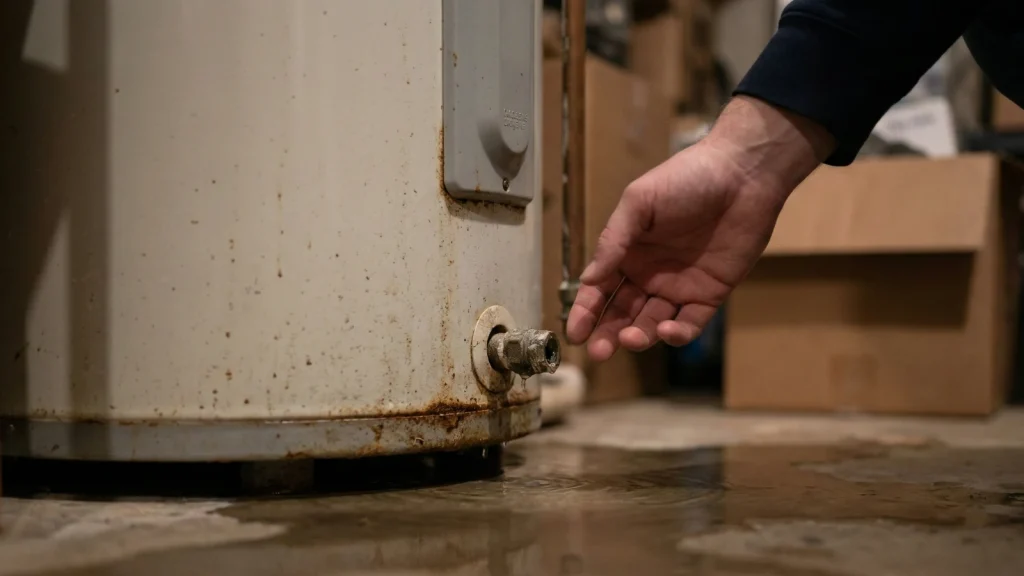
Water Heater Replacement in NH: Lifespan Check & Warning Signs
When homeowners think about “home protection,” they usually picture things like smoke detectors, sump pumps, or a backup generator. The water heater rarely makes the list—until it fails. And when a traditional tank-style water heater fails, it often fails big. A rupture can dump 40–80 gallons of water onto your basement floor in minutes, and…

Spring Maintenance in Southern NH: Get Ahead of the March Rush
Spring in Southern New Hampshire doesn’t ease in quietly. Snowmelt, early rainstorms, and rapid temperature swings can expose problems that stayed hidden all winter. March is the best time to schedule spring maintenance because your home is transitioning from winter protection to spring reactivation—and service calendars fill up quickly once consistent warm weather arrives. A…

Indoor Air Quality in Winter: How to Fix Stuffy Air in Your NH Home
Your home is sealed tight for winter—and that’s great for comfort and heating bills. But in February, many New Hampshire homes are “buttoned up,” which means you’re breathing the same air over and over. Indoor air can build up dust, odors, moisture issues, and invisible pollutants—and in some cases, it can even affect how you…

Valentine’s Day Home Love: Winter Maintenance Tips for NH Homes
Valentine’s Day is usually about taking care of the people you love. But the idea behind it—care, protection, and follow-through—translates surprisingly well to homeownership. In Southern New Hampshire, mid-February is when homes take the most punishment. Heating systems are running hard, plumbing is exposed to deep cold, and electrical panels are carrying heavy winter loads.…
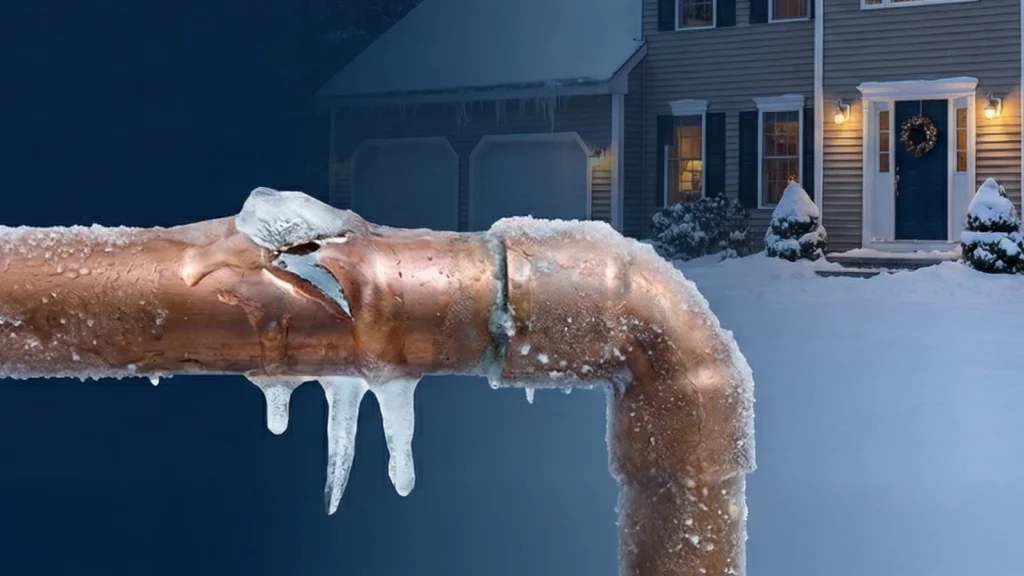
Frozen Pipes: The Hidden Threat in Every New Hampshire Winter
When temperatures plunge below zero in Southern New Hampshire, your home’s plumbing system enters a battle against physics. One side loses this battle every winter—and the cost is devastating. A single burst pipe can cause $10,000 to $15,000 in water damage, turn your home into a construction zone for weeks, and leave you fighting with…

Why NH Homeowners Trust Rinnai Tankless Water Heaters
If you’ve been researching tankless water heaters, you’ve probably noticed one name coming up again and again: Rinnai. Homeowners ask us all the time why certain brands seem to dominate professional recommendations—and whether that reputation is actually earned. After installing, servicing, and maintaining water heaters through fifty New Hampshire winters, we’ve learned that trust in…

Our Commitment to Your
PEACE OF MIND
5-year warranty on all new installations
AND 2-year warranty on all repairs!