
 Get Pre-Qualified
 603.485.4205
  24/7 Emergency Service Request
 Valentine’s Day Home Love: Winter Maintenance Tips for NH Homes
Valentine’s Day is usually about taking care of the people you love. But the idea behind it—care, protection, and follow-through—translates surprisingly well to homeownership.
In Southern New Hampshire, mid-February is when homes take the most punishment. Heating systems are running hard, plumbing is exposed to deep cold, and electrical panels are carrying heavy winter loads. The problems we respond to this time of year rarely start as emergencies. They start as small issues that go unnoticed until they become expensive.
If you want a practical way to “show your home some love,” focus on four high-impact checks: annual maintenance, hidden leaks, thermostat accuracy, and a safe electrical panel inspection.
Why these reminders matter in February
Home maintenance can feel like a grudge purchase—money spent on things you can’t show off. But in our experience, preventative work is one of the best returns you can get on your home.
Here’s why:
- Emergency repairs often cost significantly more than scheduled service because of after-hours labor and urgent parts sourcing.
- Small failures create collateral damage—water stains become mold, minor electrical overheating becomes a breaker failure, airflow issues become premature furnace wear.
- Winter is unforgiving. In New Hampshire, a few hours without heat can turn a comfort problem into frozen pipes.
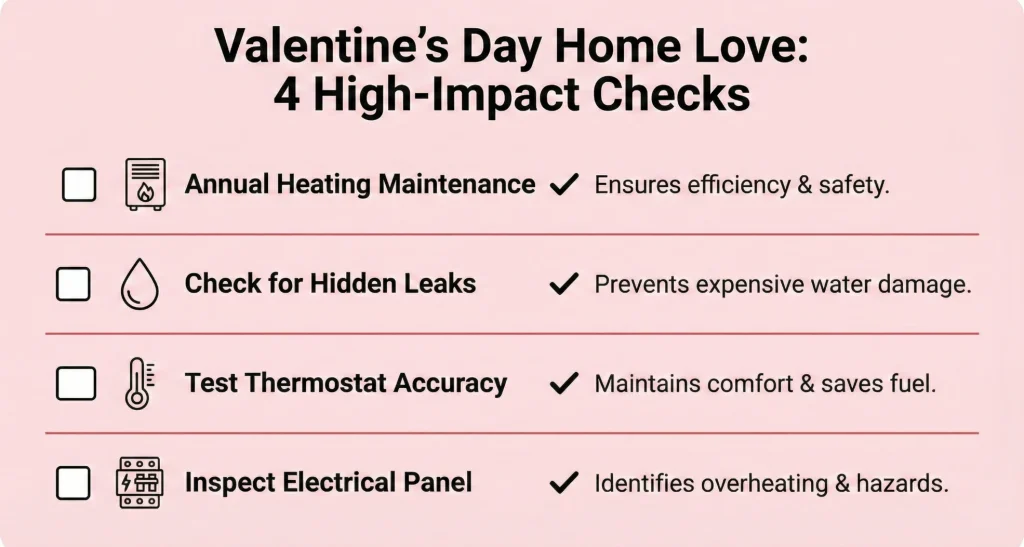
This is less about romance and more about protecting your biggest asset.
1) Schedule annual maintenance
Annual maintenance isn’t about “checking a box.” It’s about keeping your mechanical systems efficient, safe, and predictable—especially in the back half of winter.
What annual heating maintenance actually protects you from
A good tune-up isn’t just cleaning. It’s about confirming the system is operating within safe and efficient ranges.
Common issues caught during maintenance include:
- airflow restrictions that overheat components
- small ignition or combustion problems that become no-heat calls later
- worn parts that fail under peak load
Even when nothing is “wrong,” maintenance helps preserve efficiency. A system that’s running dirty or out of calibration can quietly waste fuel all winter.
If your heating system hasn’t been checked this season, February is a smart time. You’ve already put months of runtime on it, and you still need it to carry you into spring.
2) Check for hidden leaks
Water damage is one of the most expensive and most preventable categories of home repair. The challenge is that leaks don’t always show up where they start.
The simplest high-confidence test: the water meter check
- Turn off everything that uses water (including ice makers and humidifiers).
- Look at your water meter’s low-flow indicator (often a small triangle or dial).
- If it moves while nothing is on, you likely have a leak.

If you want to narrow it down further:
- Shut off the main water valve inside your home.
- If the meter still moves, the leak may be in the buried service line outside.
A quick toilet check that saves real money
Toilets can leak silently from the tank into the bowl. Add a few drops of food coloring to the tank, wait 20 minutes without flushing, and check the bowl. If color appears, the flapper is leaking.
That kind of small leak can waste thousands of gallons over time—and you’ll pay for it without realizing why.
3) Test your thermostat accuracy
Your thermostat is the control center for the entire heating system. If it’s off by even a couple degrees, you can end up overheating the house (wasting fuel) or underheating rooms (increasing freeze risk in colder areas).
A simple accuracy test
- Tape a reliable thermometer next to the thermostat.
- Put a layer of paper towel behind the thermometer so it isn’t reading the wall temperature.
- Wait 15–20 minutes.
- Compare readings.
If the difference is more than about 1°F consistently, you’re likely losing efficiency and comfort.
One important note: sometimes the thermostat isn’t “bad”—it’s just in a bad spot. Direct sunlight, drafts, or heat from nearby electronics can skew readings. If you have chronic hot/cold areas, placement may be part of the issue.
4) Inspect your electrical panel safely
Winter loads push electrical systems harder—space heaters, heat pump auxiliary heat, sump pumps, and more. You can do a safe inspection without opening the panel.
What to look and listen for
Stand in front of the panel and check for:
- buzzing, sizzling, or crackling sounds
- a burning-plastic odor
- visible rust or moisture staining
- scorch marks or discoloration on the cover
If you notice any of these, stop and call a professional. Electrical issues are one area where “wait and see” is a risky strategy.
Also: space heaters should always be plugged directly into a wall outlet—never an extension cord or power strip.
Your February Home Love plan
This week
- Replace your heating system filter (if you can access it safely)
- Run the toilet dye test
- Do a quiet water meter leak check overnight
This month
- Verify thermostat accuracy
- Do a no-touch panel inspection (listen and smell)
- Schedule annual maintenance if you haven’t yet
Ongoing through winter
- Keep the house at least 55°F if you travel
- Open sink cabinets on exterior walls during deep cold
- Disconnect hoses and protect exterior plumbing
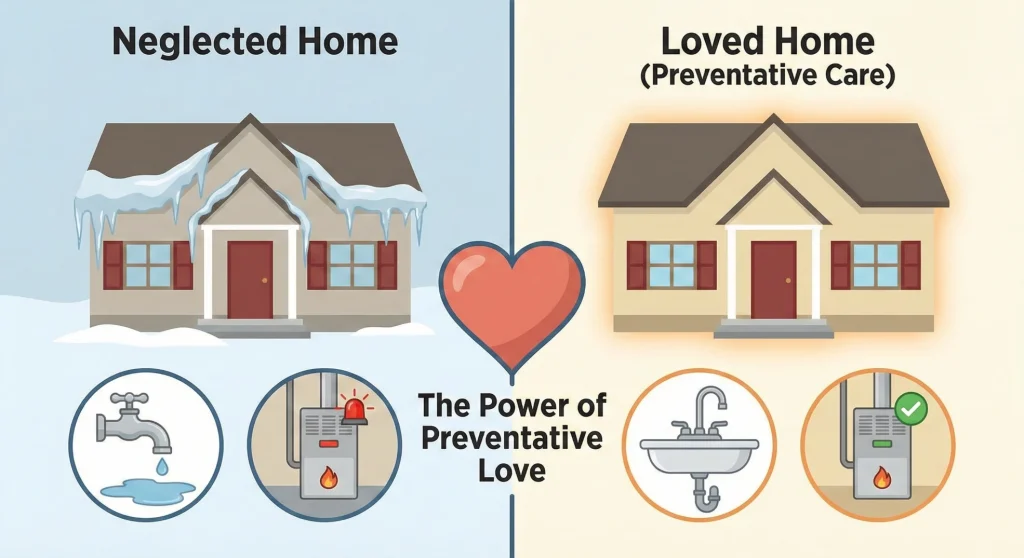
If you want help prioritizing what matters most in your home
At Al Terry Plumbing & Heating, we’ve spent 50 years working inside the same types of homes you live in—Colonials, capes, raised ranches, and newer construction across Southern New Hampshire. If you want an honest look at what should be addressed now versus what can wait, call 603-485-4205.
If you prefer staying ahead of breakdowns with routine service and priority scheduling, ask about our Diamond Club membership when you call.
More Practical Home Advice You Can Trust
Our homes face unique challenges in New Hampshire’s climate. These articles break down heating, plumbing, and electrical topics in plain language—helping you understand what matters, what can wait, and how to protect your home through every season.
Low Water Pressure in Spring? 5 Plumbing Problems NH Homeowners Shouldn’t Ignore
When spring finally shows up in New Hampshire, most homeowners are ready to open windows, clean up the yard, and put winter behind them. But for your plumbing system, spring can be one of the toughest times of year. As frost leaves the ground, snowmelt saturates the soil, municipal crews begin hydrant flushing, and aging…

How Your HVAC and Plumbing Systems Can Help Fight Spring Allergies
Spring is a welcome change in Southern New Hampshire. The snow melts, the windows start to open, and the air finally feels lighter. But for many homeowners, spring also brings sneezing, congestion, itchy eyes, and poor indoor air quality. Most people think of spring allergies as an outdoor problem. In reality, your home’s HVAC and…
Why March Is the Smartest Time to Service Your AC in New Hampshire
Why March Is the Smartest Time to Service Your AC in New Hampshire Most homeowners in New Hampshire do not think about air conditioning in March. They are still thinking about snowbanks, muddy driveways, and one more spike in the heating bill. But that is exactly why March is such a smart time to look…

Sump Pump Season Prep | Prevent Basement Flooding This Spring
Spring in Southern New Hampshire brings two things homeowners can count on: melting snow and heavy rain. That combination puts serious pressure on your home’s foundation, especially if water collects around the basement and your sump pump is not ready to handle it. Your sump pump is one of the most important lines of defense…
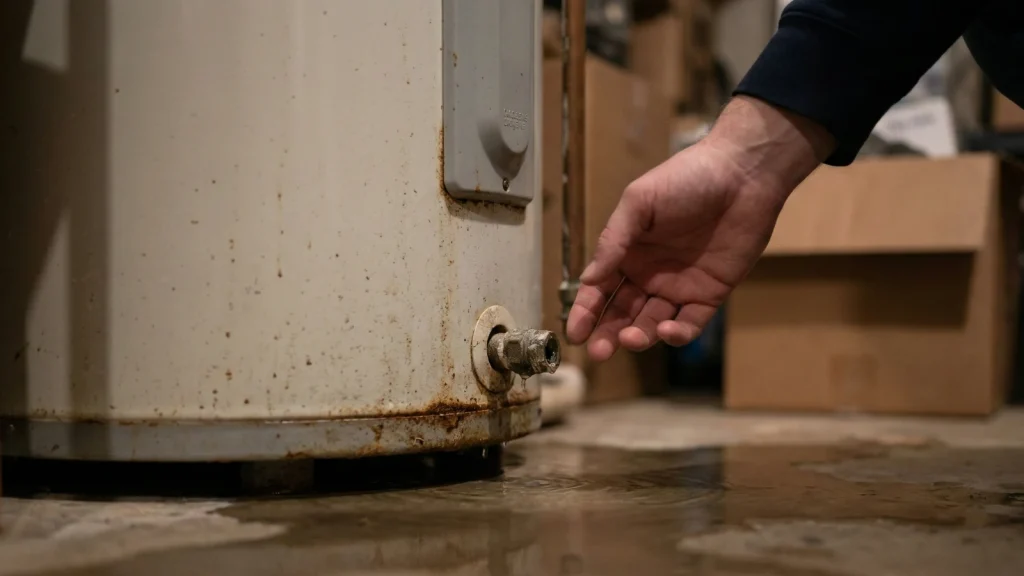
Water Heater Replacement in NH: Lifespan Check & Warning Signs
When homeowners think about “home protection,” they usually picture things like smoke detectors, sump pumps, or a backup generator. The water heater rarely makes the list—until it fails. And when a traditional tank-style water heater fails, it often fails big. A rupture can dump 40–80 gallons of water onto your basement floor in minutes, and…

Spring Maintenance in Southern NH: Get Ahead of the March Rush
Spring in Southern New Hampshire doesn’t ease in quietly. Snowmelt, early rainstorms, and rapid temperature swings can expose problems that stayed hidden all winter. March is the best time to schedule spring maintenance because your home is transitioning from winter protection to spring reactivation—and service calendars fill up quickly once consistent warm weather arrives. A…

Indoor Air Quality in Winter: How to Fix Stuffy Air in Your NH Home
Your home is sealed tight for winter—and that’s great for comfort and heating bills. But in February, many New Hampshire homes are “buttoned up,” which means you’re breathing the same air over and over. Indoor air can build up dust, odors, moisture issues, and invisible pollutants—and in some cases, it can even affect how you…

Valentine’s Day Home Love: Winter Maintenance Tips for NH Homes
Valentine’s Day is usually about taking care of the people you love. But the idea behind it—care, protection, and follow-through—translates surprisingly well to homeownership. In Southern New Hampshire, mid-February is when homes take the most punishment. Heating systems are running hard, plumbing is exposed to deep cold, and electrical panels are carrying heavy winter loads.…
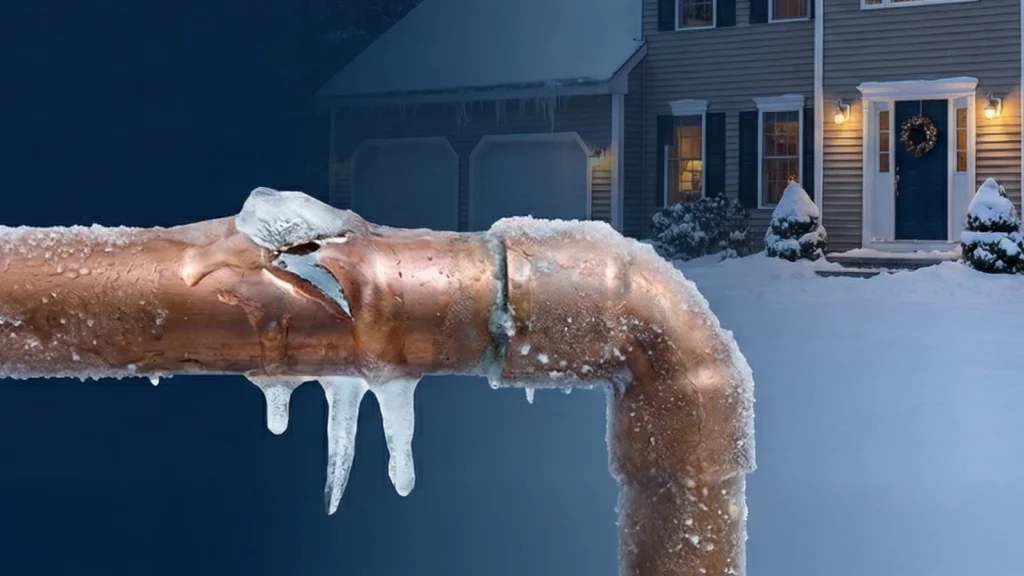
Frozen Pipes: The Hidden Threat in Every New Hampshire Winter
When temperatures plunge below zero in Southern New Hampshire, your home’s plumbing system enters a battle against physics. One side loses this battle every winter—and the cost is devastating. A single burst pipe can cause $10,000 to $15,000 in water damage, turn your home into a construction zone for weeks, and leave you fighting with…
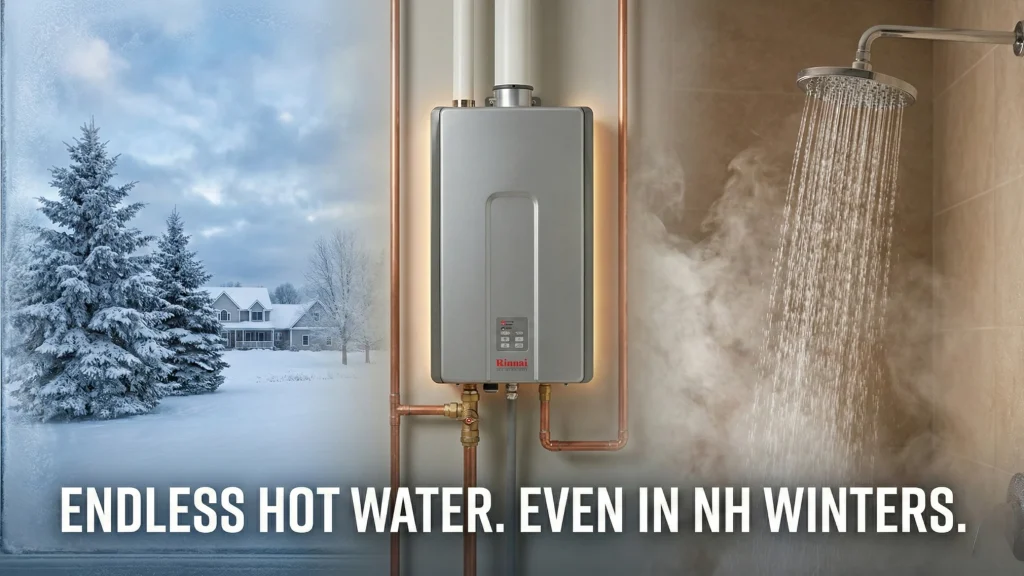
Why NH Homeowners Trust Rinnai Tankless Water Heaters
If you’ve been researching tankless water heaters, you’ve probably noticed one name coming up again and again: Rinnai. Homeowners ask us all the time why certain brands seem to dominate professional recommendations—and whether that reputation is actually earned. After installing, servicing, and maintaining water heaters through fifty New Hampshire winters, we’ve learned that trust in…

Our Commitment to Your
PEACE OF MIND
5-year warranty on all new installations
AND 2-year warranty on all repairs!