
 Get Pre-Qualified
 603.485.4205
  24/7 Emergency Service Request
 Why NH Homeowners Trust Rinnai Tankless Water Heaters
If you’ve been researching tankless water heaters, you’ve probably noticed one name coming up again and again: Rinnai. Homeowners ask us all the time why certain brands seem to dominate professional recommendations—and whether that reputation is actually earned.
After installing, servicing, and maintaining water heaters through fifty New Hampshire winters, we’ve learned that trust in this category isn’t about marketing claims. It’s about what holds up over time, especially when demand is high, water quality is challenging, and cold snaps push systems to their limits.
Here’s what homeowners should understand about why Rinnai tankless water heaters have earned that trust—and what it means for your home.
Tankless Water Heaters Only Work If the Engineering Is Right
Tankless systems don’t store hot water. They create it on demand. That sounds simple, but it puts enormous stress on internal components—heat exchangers, gas valves, and control boards cycle constantly instead of resting full of warm water like a tank.
That’s where many problems begin.
Over the years, we’ve seen lower-cost tankless units fail early because of plastic internal fittings, poorly designed water pathways, or components that simply weren’t built for long-term thermal cycling. When those parts break, repairs can be expensive—or impossible if parts availability dries up.
Rinnai took a different approach from the start. They were producing tankless water heaters as early as the 1920s, long before they became popular in the U.S. That long head start matters. Modern Rinnai units still rely on stainless steel heat exchangers and brass fittings, materials that tolerate heat stress far better than plastics over decades of use.
For homeowners, that translates into fewer breakdowns and a longer service life—often close to 20 years with proper maintenance.
Why Manufacturing and Testing Matter More Than Most People Realize
One of the biggest reasons professionals trust Rinnai is something homeowners never see: every single unit is live-tested before it leaves the factory.
Most manufacturers test samples. Rinnai tests everything.
That process dramatically reduces the chances of a brand-new unit failing right out of the box—a nightmare scenario for homeowners and installers alike. Fewer early failures also mean fewer callbacks, less downtime, and fewer surprise repair bills.
In recent years, Rinnai has also shifted major manufacturing operations to the United States, with a state-of-the-art facility in Georgia. That matters more than it sounds. Domestic manufacturing means better parts availability, shorter supply chains, and faster support when something does need attention.
In an industry where delayed parts can leave families without hot water for days, that reliability matters.
Efficiency That Actually Shows Up on Your Utility Bills
High efficiency numbers are easy to advertise. What’s harder is achieving them consistently in real-world conditions.
Rinnai’s condensing tankless models reach efficiency ratings close to 98%, meaning almost all the fuel you’re paying for is actually being converted into hot water. That’s possible because of how the internal heat exchangers are arranged to capture and reuse heat that would otherwise go up the vent.
In practical terms, this means:
- Lower gas or propane usage
- More consistent hot water during back-to-back showers
- Better performance during New Hampshire winters, when incoming water temperatures are extremely cold
For larger households or homes with multiple bathrooms, that efficiency also supports higher demand without sacrificing comfort.
Built for Real Homes, Not Just Ideal Conditions
New Hampshire homes are tough on plumbing systems. We deal with:
- Hard or mineral-heavy water
- Long winters and cold groundwater
- Older homes with tight mechanical spaces
Rinnai designs its systems to handle these realities. Many models offer built-in or optional recirculation systems that reduce wait time for hot water without constantly running a pump. Newer intelligent recirculation features actually learn your household’s usage patterns, delivering hot water when you typically need it instead of wasting energy all day.
For homeowners, that means faster hot water and lower operating costs—without adding complicated external equipment.
Installation Simplicity Reduces Long-Term Risk
Tankless systems only perform as well as they’re installed. We see more failures caused by installation errors than by defective equipment.
Rinnai addresses this by simplifying configuration. Many models can be adapted for indoor or outdoor installation and for natural gas or propane without extensive conversion kits. Fewer parts and fewer adjustments reduce the chance of mistakes.
From a homeowner’s perspective, that lowers risk—not just at installation, but years down the road when service is needed.
Warranty Coverage That Reflects Real Confidence
Warranties tell you how confident a manufacturer truly is in their product.
Rinnai offers:
- Up to 15 years on the heat exchanger
- 5 years on parts
- Up to 5 years on labor when installed and registered properly
That labor coverage is especially important. Labor is often the most expensive part of a repair, and most manufacturers only offer one year. Extended coverage protects homeowners from early ownership costs and reinforces the importance of professional installation.
What This Means for New Hampshire Homeowners
Tankless water heaters aren’t the right solution for every home. They require proper sizing, professional installation, and ongoing maintenance. But when a tankless system does make sense, choosing a proven platform matters.
Rinnai’s reputation isn’t built on hype. It’s built on decades of consistent performance, conservative engineering choices, and systems designed to last through demanding conditions.
At Al Terry Plumbing & Heating, we recommend equipment based on what we know will still be working ten or fifteen years from now—not what looks good on paper today. After fifty years of servicing homes across Southern New Hampshire, that long-term perspective is non-negotiable.
If you’re considering a tankless water heater and want an honest evaluation of whether it makes sense for your home, give us a call at 603-485-4205. We’re happy to walk through the options, costs, and trade-offs so you can make an informed decision—not a rushed one.
More Practical Home Advice You Can Trust
Our homes face unique challenges in New Hampshire’s climate. These articles break down heating, plumbing, and electrical topics in plain language—helping you understand what matters, what can wait, and how to protect your home through every season.
Low Water Pressure in Spring? 5 Plumbing Problems NH Homeowners Shouldn’t Ignore
When spring finally shows up in New Hampshire, most homeowners are ready to open windows, clean up the yard, and put winter behind them. But for your plumbing system, spring can be one of the toughest times of year. As frost leaves the ground, snowmelt saturates the soil, municipal crews begin hydrant flushing, and aging…

How Your HVAC and Plumbing Systems Can Help Fight Spring Allergies
Spring is a welcome change in Southern New Hampshire. The snow melts, the windows start to open, and the air finally feels lighter. But for many homeowners, spring also brings sneezing, congestion, itchy eyes, and poor indoor air quality. Most people think of spring allergies as an outdoor problem. In reality, your home’s HVAC and…
Why March Is the Smartest Time to Service Your AC in New Hampshire
Why March Is the Smartest Time to Service Your AC in New Hampshire Most homeowners in New Hampshire do not think about air conditioning in March. They are still thinking about snowbanks, muddy driveways, and one more spike in the heating bill. But that is exactly why March is such a smart time to look…

Sump Pump Season Prep | Prevent Basement Flooding This Spring
Spring in Southern New Hampshire brings two things homeowners can count on: melting snow and heavy rain. That combination puts serious pressure on your home’s foundation, especially if water collects around the basement and your sump pump is not ready to handle it. Your sump pump is one of the most important lines of defense…
Water Heater Replacement in NH: Lifespan Check & Warning Signs
When homeowners think about “home protection,” they usually picture things like smoke detectors, sump pumps, or a backup generator. The water heater rarely makes the list—until it fails. And when a traditional tank-style water heater fails, it often fails big. A rupture can dump 40–80 gallons of water onto your basement floor in minutes, and…
Spring Maintenance in Southern NH: Get Ahead of the March Rush
Spring in Southern New Hampshire doesn’t ease in quietly. Snowmelt, early rainstorms, and rapid temperature swings can expose problems that stayed hidden all winter. March is the best time to schedule spring maintenance because your home is transitioning from winter protection to spring reactivation—and service calendars fill up quickly once consistent warm weather arrives. A…

Indoor Air Quality in Winter: How to Fix Stuffy Air in Your NH Home
Your home is sealed tight for winter—and that’s great for comfort and heating bills. But in February, many New Hampshire homes are “buttoned up,” which means you’re breathing the same air over and over. Indoor air can build up dust, odors, moisture issues, and invisible pollutants—and in some cases, it can even affect how you…

Valentine’s Day Home Love: Winter Maintenance Tips for NH Homes
Valentine’s Day is usually about taking care of the people you love. But the idea behind it—care, protection, and follow-through—translates surprisingly well to homeownership. In Southern New Hampshire, mid-February is when homes take the most punishment. Heating systems are running hard, plumbing is exposed to deep cold, and electrical panels are carrying heavy winter loads.…
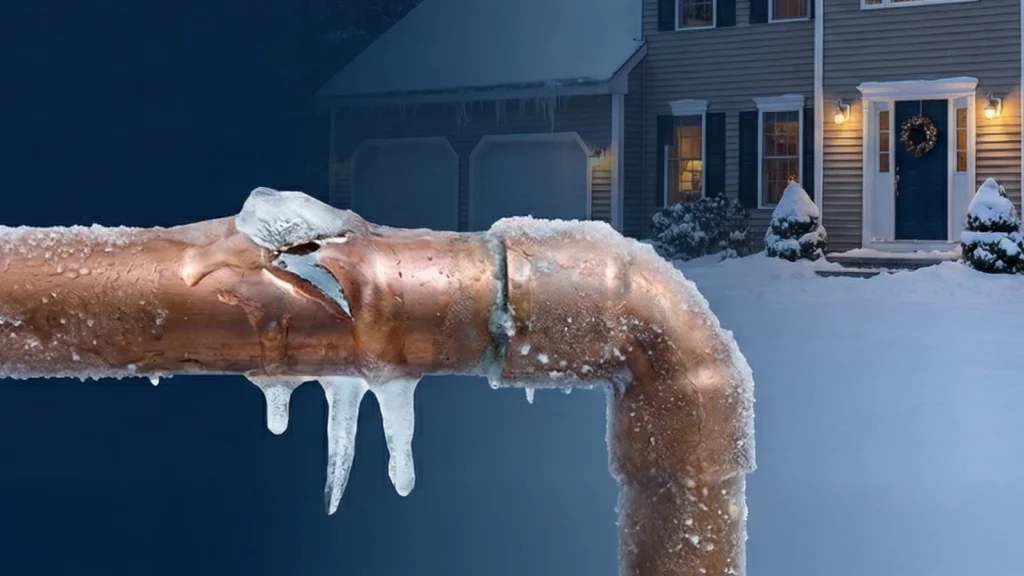
Frozen Pipes: The Hidden Threat in Every New Hampshire Winter
When temperatures plunge below zero in Southern New Hampshire, your home’s plumbing system enters a battle against physics. One side loses this battle every winter—and the cost is devastating. A single burst pipe can cause $10,000 to $15,000 in water damage, turn your home into a construction zone for weeks, and leave you fighting with…
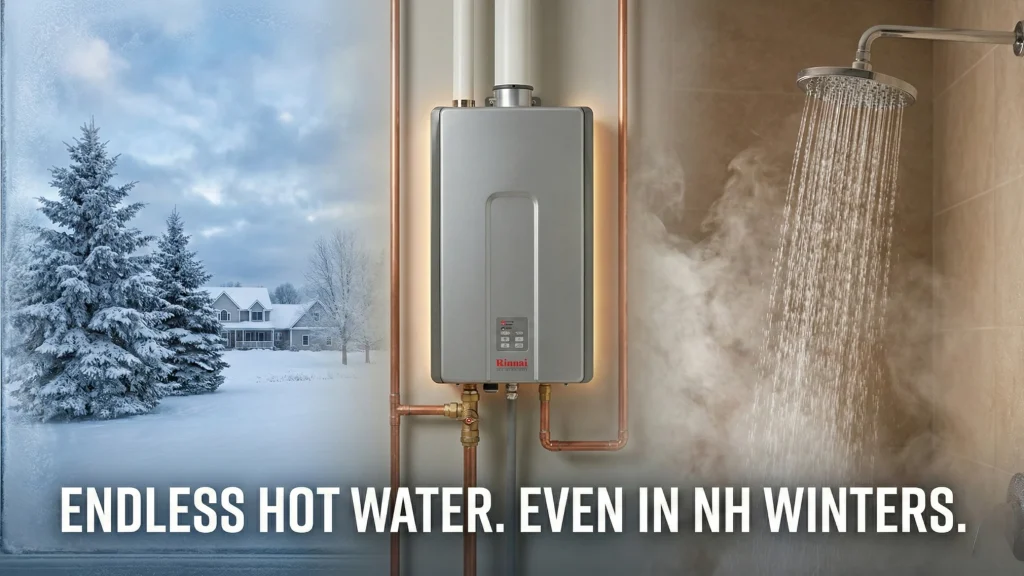
Why NH Homeowners Trust Rinnai Tankless Water Heaters
If you’ve been researching tankless water heaters, you’ve probably noticed one name coming up again and again: Rinnai. Homeowners ask us all the time why certain brands seem to dominate professional recommendations—and whether that reputation is actually earned. After installing, servicing, and maintaining water heaters through fifty New Hampshire winters, we’ve learned that trust in…

Our Commitment to Your
PEACE OF MIND
5-year warranty on all new installations
AND 2-year warranty on all repairs!