
 Get Pre-Qualified
 603.485.4205
  24/7 Emergency Service Request
 Why March Is the Smartest Time to Service Your AC in New Hampshire
Why March Is the Smartest Time to Service Your AC in New Hampshire
Most homeowners in New Hampshire do not think about air conditioning in March. They are still thinking about snowbanks, muddy driveways, and one more spike in the heating bill. But that is exactly why March is such a smart time to look at your cooling system.
Your AC has been sitting idle for months. That does not always mean it is fine. A system can come through winter with a dirty filter, blocked airflow, a sluggish capacitor, a clogged drain line, or damage around the outdoor unit from snow, ice, or debris. You usually do not notice those problems until the first warm day, when the system suddenly has to work again.
That is when a small issue turns into an uncomfortable one.
ENERGY STAR recommends annual pre-season checkups and says spring is the best time to service cooling equipment before contractors get busy for summer. The reason is simple: you are far more likely to catch problems early, schedule service on your terms, and avoid the first-wave rush when everyone else turns on the AC at once.
What winter can leave behind
A lot of homeowners assume an AC problem has to come from summer wear. In reality, winter can set the stage for summer breakdowns.
Outdoor units in New Hampshire take a beating. Snow and ice can pack around the condenser. Leaves and twigs can collect in the cabinet. Freeze-thaw cycles can leave parts dirty or stressed before the season even starts. Inside the home, a filter may have gone unchanged, and a condensate drain line may be ready to clog as soon as the system starts pulling humidity out of the air.
Then there are the problems you cannot see. A weak capacitor may still let the system start a few times before it finally gives up. Low refrigerant may not show itself until the unit runs longer on a hot afternoon. Poor airflow may not feel obvious in March, but in July it can leave the second floor warm and the system running nonstop.
That is why early service has real value. It is not just “maintenance.” It is a chance to find wear before hot weather exposes it.
What you can do yourself before you schedule service
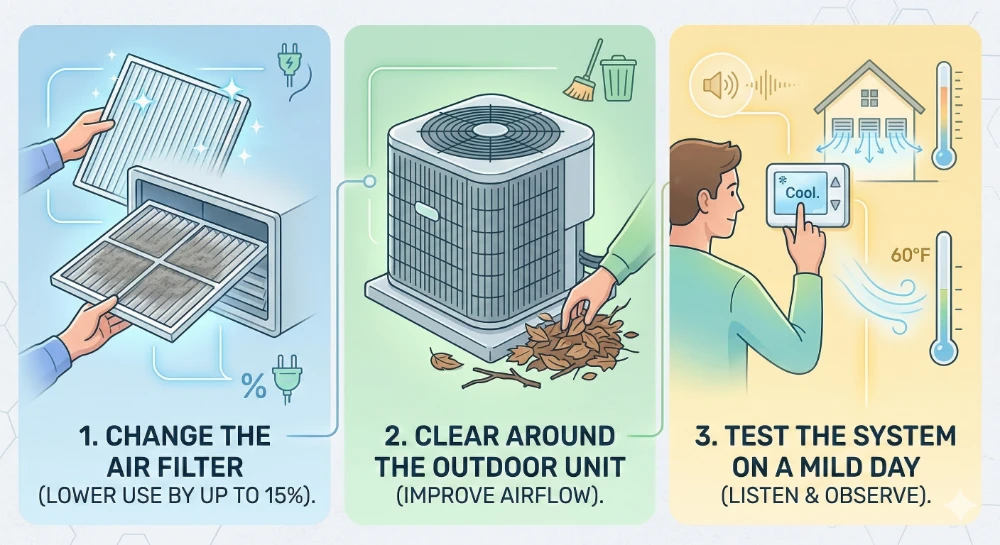
There are a few useful things a homeowner can do in March before the first warm spell arrives:
- Change the air filter. A clogged filter restricts airflow, makes the system work harder, and can lead to comfort problems once cooling season starts. The U.S. Department of Energy says replacing a dirty filter can lower an air conditioner’s energy use by up to 15 percent.
- Clear around the outdoor unit. Remove leaves, branches, and anything else that built up around the condenser over winter. Good airflow around that unit matters more than many homeowners realize.
- Test the system on a mild day. Turn the AC on before you actually need it. Listen for unusual noises, check whether cool air reaches the vents, and pay attention to weak airflow, musty smells, or a system that starts and stops too often.
Those steps will not replace professional service, but they do help you catch obvious problems while you still have time to deal with them calmly.
What a proper spring tune-up should actually cover
Homeowners sometimes hear “tune-up” and picture a quick once-over. A good spring visit should do much more than that.
ENERGY STAR’s maintenance guidance includes checking thermostat settings, tightening electrical connections, measuring voltage and current on motors, inspecting the condensate drain, cleaning coils when needed, and checking airflow and system operation. Those are not small details. They are the things that affect whether your AC runs efficiently, starts reliably, and keeps your home comfortable when the weather turns hot.
This matters for comfort, but it also matters for cost. When airflow drops or coils get dirty, the system has to run longer to do the same job. When electrical parts weaken, the system may still run, but it works harder than it should. Over time, that extra strain shows up in higher utility bills and more wear on major parts.
In plain language, March service helps answer the questions homeowners actually care about: Is the system clean? Is it safe to run? Is it cooling the way it should? And is this a fix-now problem or a keep-an-eye-on-it problem?
Why 2026 makes early planning even more important
This year adds another reason not to wait until summer.
The EPA’s Technology Transitions rules have changed the market for new HVAC equipment. New higher-GWP systems like traditional R-410A split-system installs can no longer be installed as new systems after the rule’s compliance deadlines, even though components for existing R-410A systems can still be sold and used for service. In other words, many homeowners can still repair and maintain older systems, but replacement choices now require more planning than they used to.
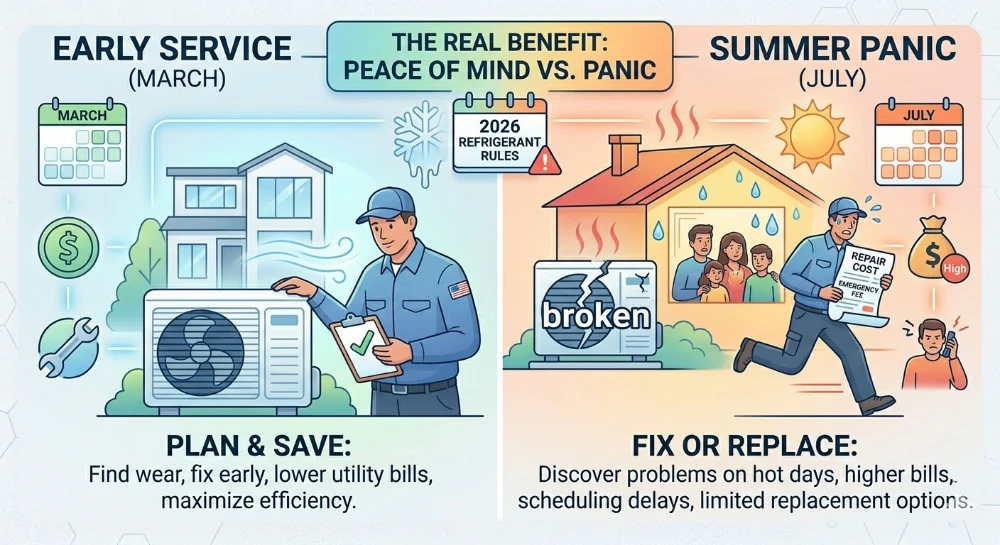
That does not mean every older AC needs to be replaced this year. It does mean that if your system is aging, leaking refrigerant, or struggling to keep up, March is a better time to have that conversation than July.
A spring visit gives you time to think clearly. You can find out whether your system is worth repairing, whether it still has a few good years left, and what your upgrade options look like before you are dealing with peak-season delays.
For New Hampshire homeowners, it is also a smart time to ask about incentives. NHSaves currently lists rebates for qualifying high-efficiency cooling equipment and heat pumps, and it notes that R-410A heat pump models are no longer eligible on its qualified product list in 2026.
The real benefit is peace of mind before summer
Most people are not looking for a lesson in refrigerants or electrical readings. They just want the house to stay comfortable when the first hot stretch hits.
That is the real value of March service. It gives you time to fix a small problem before it becomes a bigger one. It helps your system run more efficiently. It can reduce the risk of an inconvenient midsummer breakdown. And if your equipment is getting older, it gives you time to plan instead of panic.
That is a much better place to be than discovering a problem on the first 85-degree day of the year.
Need to get your AC ready before warm weather arrives?
Al Terry Plumbing, Heating, Air & Electric helps New Hampshire homeowners get ahead of breakdowns with professional spring HVAC service and honest advice about what to fix, what to watch, and when it makes sense to plan for replacement.
More Practical Home Advice You Can Trust
Our homes face unique challenges in New Hampshire’s climate. These articles break down heating, plumbing, and electrical topics in plain language—helping you understand what matters, what can wait, and how to protect your home through every season.

Why Your Home Feels Sticky When It Is Not Hot Outside
New Hampshire weather has a way of confusing your home’s comfort system One day it is cool enough to leave the windows closed. The next day the house feels damp, sticky, and uncomfortable — even though the thermostat says it is only 68 or 70 degrees inside. That is one of the most common shoulder-season…

Why Your Upstairs Is Always Hotter Than the Living Room
If you own a two-story Colonial in southern New Hampshire, this may sound familiar: The living room feels fine. The thermostat says the AC is working. But the upstairs bedrooms are still warm, sticky, and uncomfortable. By bedtime, the second floor can feel 6, 8, or even 10 degrees hotter than the first floor. The…

Ductless Mini-Splits for Older NH Homes Without Ductwork
Older New Hampshire homes have a lot of character. They also have a comfort challenge. Many Colonials, Capes, farmhouses, and mid-century homes were built around boilers, radiators, or hot-water baseboard heat. Those systems can keep a home warm, but they were not designed for central air conditioning. In many older homes, there simply is not…
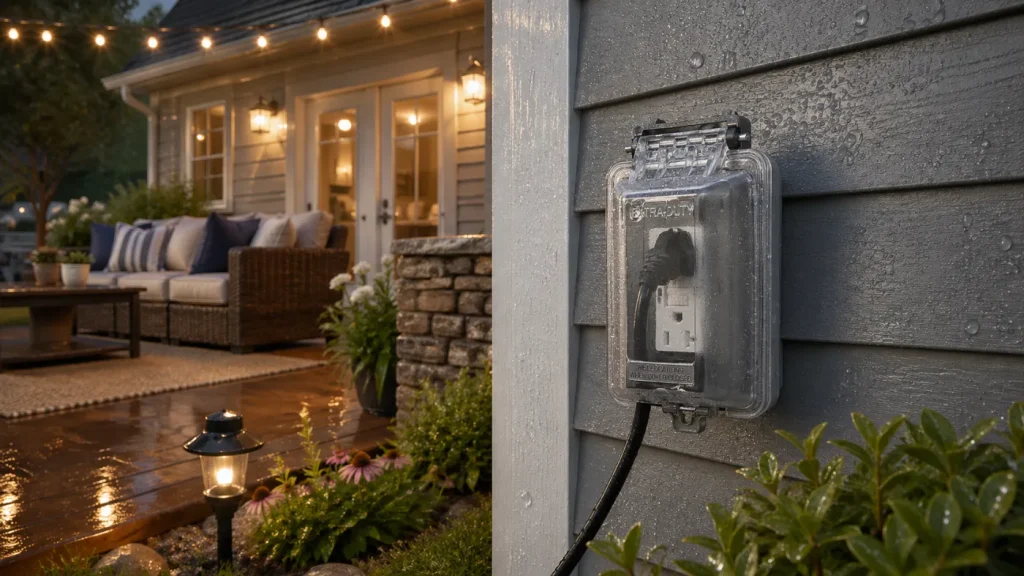
Outdoor GFCI Outlets: Why Weatherproof Protection Matters for NH Homes
Outdoor power is something most homeowners use without thinking much about it. You plug in holiday lights. Run a power washer. Charge yard tools. Power patio speakers. Use landscape lighting. Maybe you have an outdoor kitchen, pool equipment, irrigation controls, or smart devices around the house. But outdoor electricity has to deal with conditions indoor…
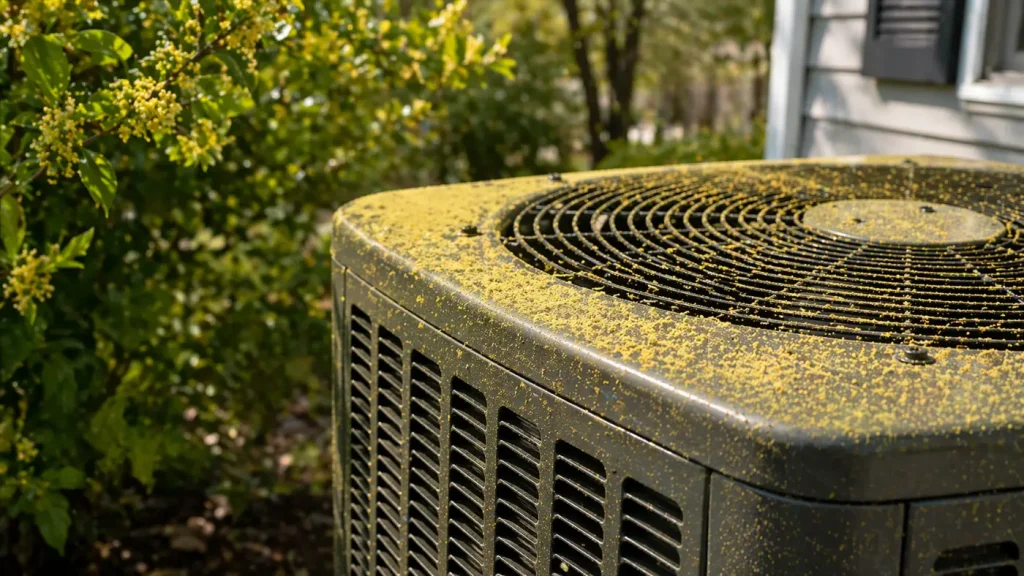
Why NH Pollen Is Hitting Your HVAC System Harder This Year
If it feels like pollen season is worse than usual this spring, you’re not imagining it. Across New Hampshire, homeowners are dealing with heavy tree pollen from oak, maple, and ash. Most people think of pollen as an allergy problem. Sneezing, itchy eyes, congestion. But what many homeowners do not realize is that pollen can…
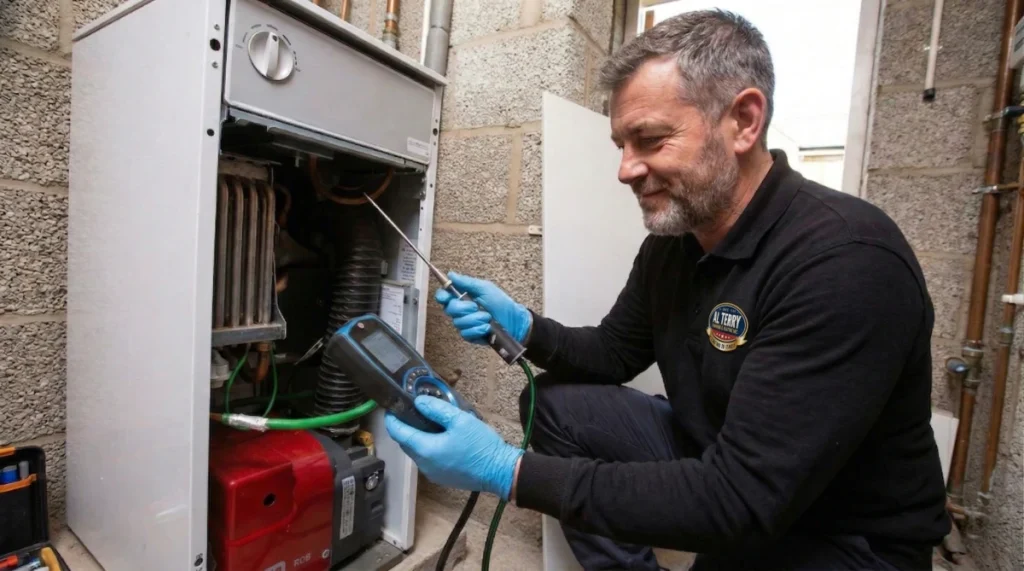
Should You Shut Your Boiler Off for Spring in NH?
When the weather starts warming up in New Hampshire, a lot of homeowners start asking the same question: Should I shut my boiler off for the season, or leave it running? The honest answer is that it depends on your system. For many homes, mid-to-late April is the right time to stop using the heating…

Tired of High Electric Bills in Southern NH? Start With These Smart Upgrades
If your electric bill in Southern New Hampshire has been climbing, you are not imagining it. Between high regional electricity costs, older homes that leak heated or cooled air, and HVAC systems working harder than they should, many homeowners are paying more every month than necessary. The good news is that lowering your bill does…
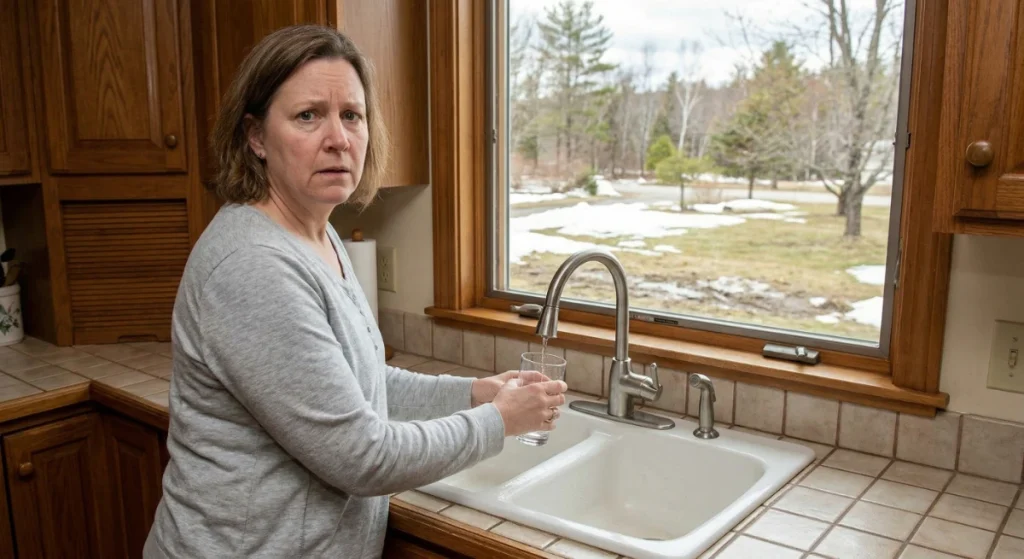
Low Water Pressure in Spring? 5 Plumbing Problems NH Homeowners Shouldn’t Ignore
When spring finally shows up in New Hampshire, most homeowners are ready to open windows, clean up the yard, and put winter behind them. But for your plumbing system, spring can be one of the toughest times of year. As frost leaves the ground, snowmelt saturates the soil, municipal crews begin hydrant flushing, and aging…

How Your HVAC and Plumbing Systems Can Help Fight Spring Allergies
Spring is a welcome change in Southern New Hampshire. The snow melts, the windows start to open, and the air finally feels lighter. But for many homeowners, spring also brings sneezing, congestion, itchy eyes, and poor indoor air quality. Most people think of spring allergies as an outdoor problem. In reality, your home’s HVAC and…
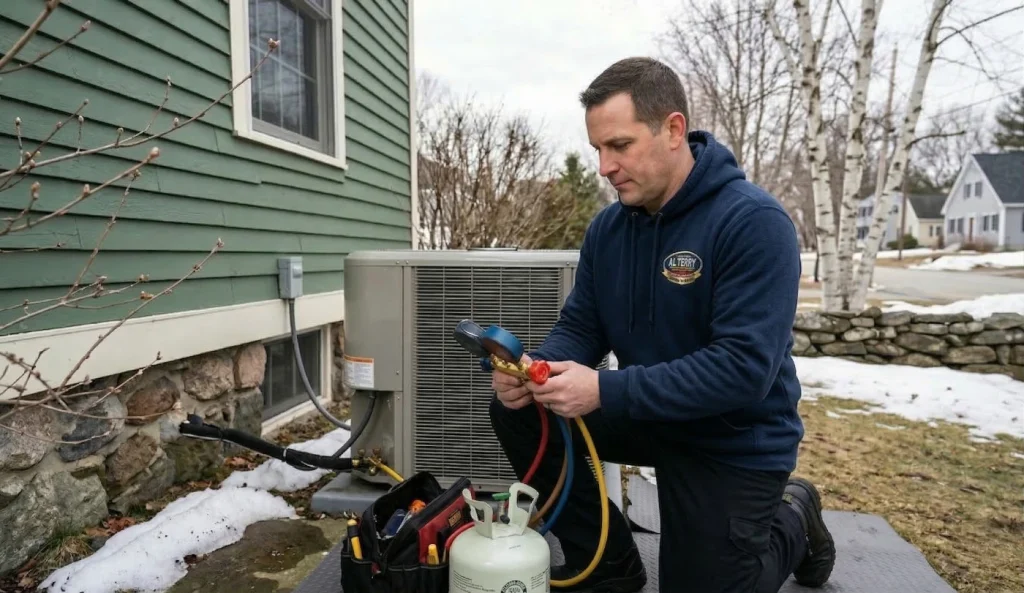
Why March Is the Smartest Time to Service Your AC in New Hampshire
Why March Is the Smartest Time to Service Your AC in New Hampshire Most homeowners in New Hampshire do not think about air conditioning in March. They are still thinking about snowbanks, muddy driveways, and one more spike in the heating bill. But that is exactly why March is such a smart time to look…

Our Commitment to Your
PEACE OF MIND
5-year warranty on all new installations
AND 2-year warranty on all repairs!