
 Get Pre-Qualified
 603.485.4205
  24/7 Emergency Service Request
 Ductless Mini-Splits for Older NH Homes Without Ductwork
Older New Hampshire homes have a lot of character.
They also have a comfort challenge.
Many Colonials, Capes, farmhouses, and mid-century homes were built around boilers, radiators, or hot-water baseboard heat. Those systems can keep a home warm, but they were not designed for central air conditioning. In many older homes, there simply is not a duct system to connect to.
That makes traditional central air difficult. Adding ductwork may mean opening walls, cutting through plaster, changing finished spaces, or giving up valuable closet and attic space.
Ductless mini-splits offer another path.
For many older NH homes, a ductless mini-split system can add efficient heating, cooling, and room-by-room comfort without the disruption of installing full ductwork. ENERGY STAR describes ductless mini-splits as an option for homes without ductwork and as an alternative to radiator or baseboard heating, while also replacing window units for cooling.
Why Older NH Homes Are a Good Fit
Older homes were not built the way new homes are.
A Cape may have hot upstairs bedrooms tucked under the roof. A Colonial may have small, separate rooms where air does not move easily from one space to the next. A house with hot-water baseboard heat may have a perfectly useful boiler but no way to cool the home in July and August.
A ductless mini-split can target the spaces where comfort is hardest to control.
Instead of trying to force air through long duct runs, mini-splits use one outdoor unit connected to one or more indoor units. Those indoor units can be placed in specific rooms or zones, such as a main living area, upstairs bedroom, home office, finished attic, or addition.
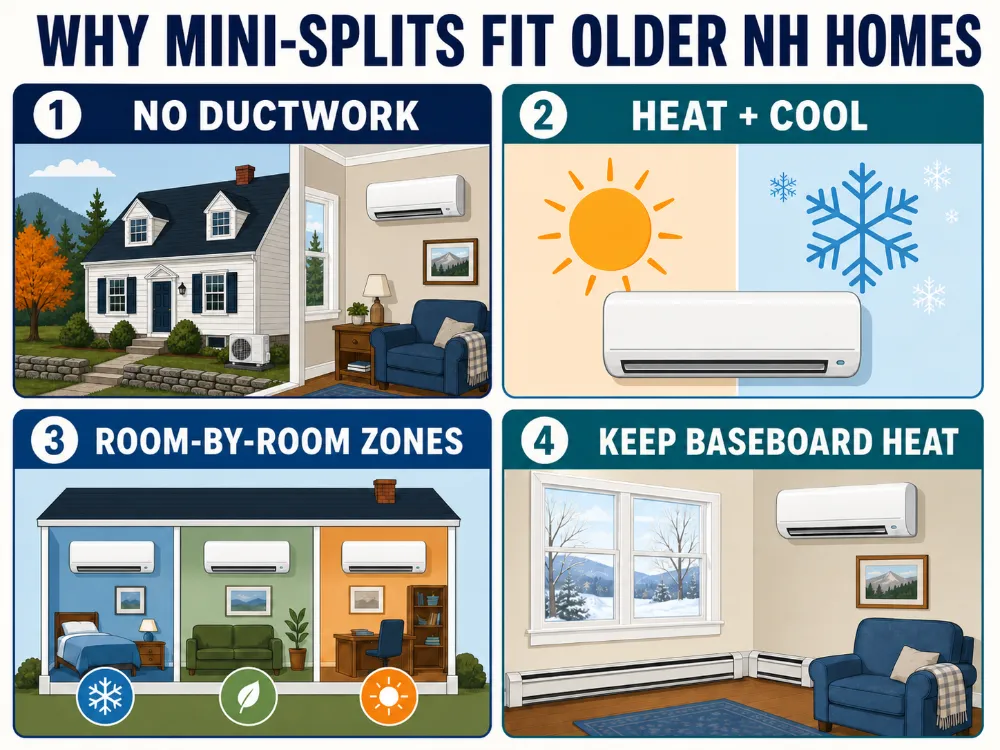
That zoning is one of the biggest advantages for older homes. You do not have to treat the whole house like one open space when it was never built that way.
Capes and Colonials Need Different Plans
A good mini-split layout depends on the home.
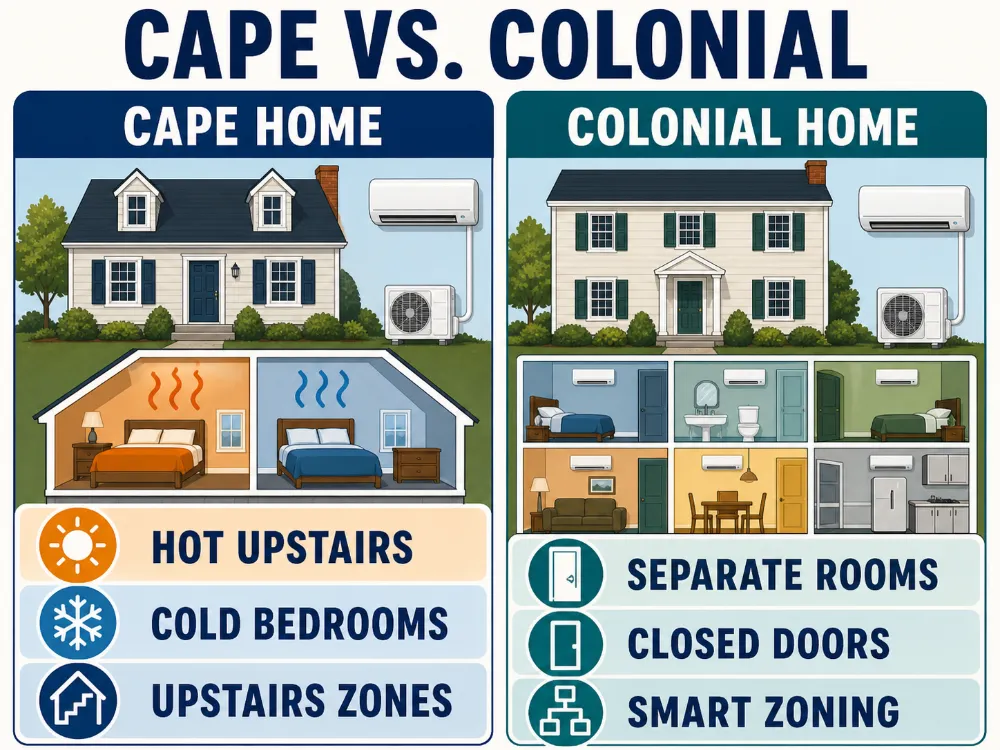
Cape-style homes often struggle upstairs. The bedrooms sit close to the roof, so they can overheat in summer and lose heat quickly in winter. A single thermostat downstairs usually does not reflect what is happening in those rooms.
Colonial homes have a different issue. Their separate rooms are part of the charm, but closed doors and narrow hallways limit airflow. One indoor unit in a hallway may not solve comfort problems in every bedroom.
That is why mini-split design matters more than simply choosing a brand.
| Older-home issue | Why it matters | Mini-split design consideration |
|---|---|---|
| No ductwork | Central air may be invasive | Ductless or compact ducted zones |
| Cape upstairs bedrooms | Heat builds near the roof | Dedicated bedroom or second-floor zones |
| Colonial room layout | Air does not move easily | Multiple heads or carefully planned zones |
| Boiler/baseboard heat | Existing heat may still be useful | Hybrid comfort plan with backup heat |
| Older electrical panel | Capacity may be limited | Electrical review before installation |
Sizing Matters in New Hampshire
Mini-splits should not be sized by guesswork.
A system that is too small may struggle during cold snaps or hot afternoons. A system that is too large can short-cycle, feel less comfortable, and do a poor job removing humidity in cooling season.
ENERGY STAR recommends that contractors verify proper heat pump sizing with Manual J, a calculation of how much heating and cooling the home actually needs. For New Hampshire homes, ENERGY STAR also recommends choosing equipment suited for cold climates and considering how the system will work with backup heat when temperatures drop very low.
For older homes, this is especially important.
Two houses with the same square footage may perform very differently. One may have updated insulation and tight windows. Another may have drafty rim joists, older plaster walls, and little attic insulation. The right system should be matched to the actual home, not just the room size.
Weatherization Helps Performance
Ductless mini-splits work best when the home can hold the comfort they create.
That does not mean every older home needs to be fully renovated before mini-splits make sense. It does mean insulation and air sealing should be part of the conversation.
Attics, knee walls, basement rim joists, old window areas, and exterior wall cavities can all affect comfort. If the home is drafty, the mini-split has to work harder. If the home is tighter, the system can often run more steadily and comfortably.
This is another reason a consultation should look at the whole home, not just where the indoor units might go.
Can You Keep Your Boiler?
In many older NH homes, yes.
A ductless mini-split system does not always mean removing the existing boiler, radiators, or hot-water baseboard heat. Many homeowners use mini-splits to handle cooling, improve hard-to-condition rooms, and reduce how often the oil, propane, or gas system runs.
That can be a smart transition.
The boiler can remain available for backup heat, very cold weather, or rooms that are not served by mini-split zones. The best setup depends on the layout, insulation, fuel type, electrical capacity, and how much of the home you want the mini-splits to handle.
Not sure whether your older NH home needs one zone, several zones, or a boiler-plus-mini-split setup? Schedule a free mini-split consultation with Al Terry before you invest.
Installation Details Matter
Mini-splits are often called “ductless,” but they are not detail-free.
The indoor and outdoor units still need refrigerant lines, electrical connections, and condensate drainage. In older homes, these details matter because of plaster walls, finished rooms, historic trim, tight basements, and visible exterior siding.
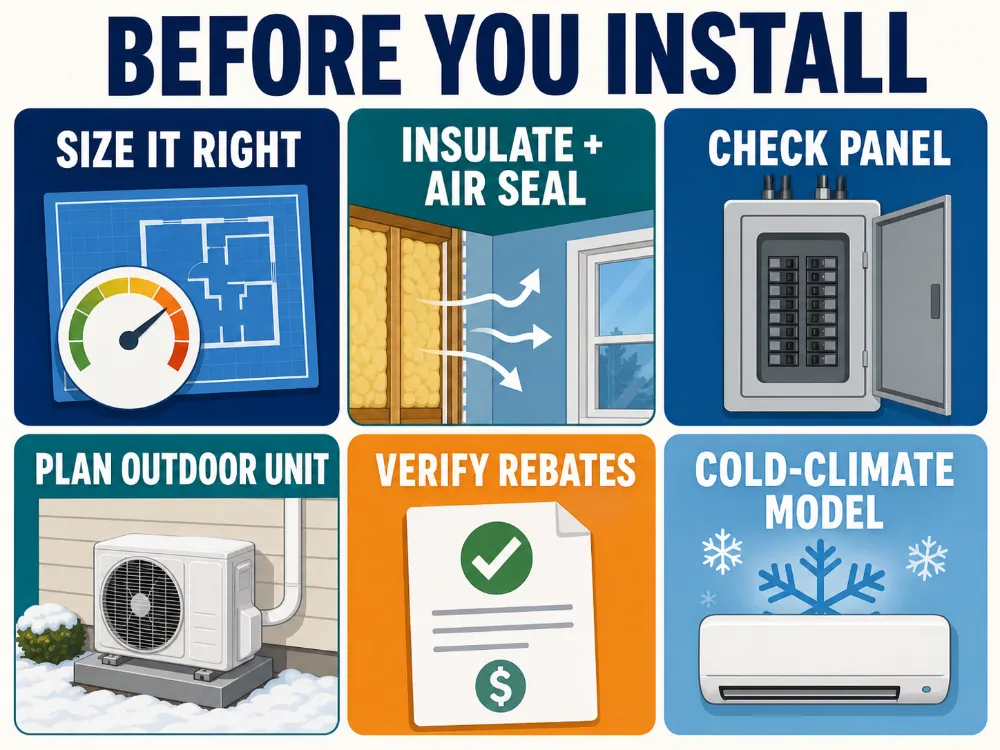
A good installation plan should answer practical questions:
- Where will the indoor units go?
- How will the line sets be routed?
- Can the outdoor unit be placed where snow, ice, and service access are handled properly?
- Where will condensate drain safely?
- Does the electrical panel have capacity?
- Will the equipment qualify for current rebates?
These details protect the home and help the system perform the way it should.
Mini-splits also need maintenance. Filters should be cleaned regularly, and the system should be serviced so coils, drains, and outdoor equipment stay in good condition. ENERGY STAR notes that heat pump filters should be cleaned when dirty or when the filter light indicates service is needed.
2026 Rebates and Tax Credit Notes
Rebates can help with project cost, but the rules change.
As of May 2026, NHSaves lists mail-in rebates for qualifying air-source heat pumps. Customers switching from oil, natural gas, or propane systems may be eligible for standard heat pump rebates, while enhanced rebates for replacing electric resistance heat require pre-verification before installation. NHSaves also notes that rebate amounts are based on tonnage, limits may apply, and funding can change.
There is also a 2026 equipment detail homeowners should know. NHSaves says heat pump models using R410A refrigerant were removed from the Heat Pump Qualified Product List effective January 1, 2026, and are not eligible for rebates.
Federal tax credit rules have changed too. The IRS states that energy efficient home improvement credits cannot be claimed for property placed in service after December 31, 2025. For 2026 mini-split projects, homeowners should not assume the former federal heat pump tax credit is available.
Before building your budget around incentives, confirm the exact equipment model, utility eligibility, refrigerant type, rebate requirements, and current IRS guidance.
What a Mini-Split Consultation Should Cover
A good consultation should do more than count rooms.
For an older New Hampshire home, the technician should review the home’s layout, insulation, existing boiler or baseboard heat, electrical panel, possible indoor unit locations, outdoor unit placement, condensate drainage, and rebate eligibility.
That helps answer the real question: what system will make this specific home more comfortable without unnecessary disruption?
Al Terry Plumbing & Heating has served New Hampshire and southern Maine since 1976 and provides plumbing, heating, air-conditioning, and electrical services. The Al Terry website also offers a free mini-split consultation option for ductless AC and heat.
The Bottom Line
Ductless mini-splits can be a strong fit for older NH homes without ductwork, especially Colonials, Capes, and homes with hot-water baseboard heat.
They can add cooling, improve room-by-room comfort, reduce reliance on older heating equipment, and avoid the disruption of installing full ductwork.
The key is careful design.
Choose the right cold-climate equipment. Size it properly. Plan the zones around the home’s layout. Review electrical capacity. Keep backup heat in the conversation. Confirm rebates before installation.
Ready to make your older NH home more comfortable? Schedule a free mini-split consultation with Al Terry and find out what makes sense for your home.
More Practical Home Advice You Can Trust
Our homes face unique challenges in New Hampshire’s climate. These articles break down heating, plumbing, and electrical topics in plain language—helping you understand what matters, what can wait, and how to protect your home through every season.

Why Your Home Feels Sticky When It Is Not Hot Outside
New Hampshire weather has a way of confusing your home’s comfort system One day it is cool enough to leave the windows closed. The next day the house feels damp, sticky, and uncomfortable — even though the thermostat says it is only 68 or 70 degrees inside. That is one of the most common shoulder-season…

Why Your Upstairs Is Always Hotter Than the Living Room
If you own a two-story Colonial in southern New Hampshire, this may sound familiar: The living room feels fine. The thermostat says the AC is working. But the upstairs bedrooms are still warm, sticky, and uncomfortable. By bedtime, the second floor can feel 6, 8, or even 10 degrees hotter than the first floor. The…
Ductless Mini-Splits for Older NH Homes Without Ductwork
Older New Hampshire homes have a lot of character. They also have a comfort challenge. Many Colonials, Capes, farmhouses, and mid-century homes were built around boilers, radiators, or hot-water baseboard heat. Those systems can keep a home warm, but they were not designed for central air conditioning. In many older homes, there simply is not…
Outdoor GFCI Outlets: Why Weatherproof Protection Matters for NH Homes
Outdoor power is something most homeowners use without thinking much about it. You plug in holiday lights. Run a power washer. Charge yard tools. Power patio speakers. Use landscape lighting. Maybe you have an outdoor kitchen, pool equipment, irrigation controls, or smart devices around the house. But outdoor electricity has to deal with conditions indoor…
Why NH Pollen Is Hitting Your HVAC System Harder This Year
If it feels like pollen season is worse than usual this spring, you’re not imagining it. Across New Hampshire, homeowners are dealing with heavy tree pollen from oak, maple, and ash. Most people think of pollen as an allergy problem. Sneezing, itchy eyes, congestion. But what many homeowners do not realize is that pollen can…
Should You Shut Your Boiler Off for Spring in NH?
When the weather starts warming up in New Hampshire, a lot of homeowners start asking the same question: Should I shut my boiler off for the season, or leave it running? The honest answer is that it depends on your system. For many homes, mid-to-late April is the right time to stop using the heating…

Tired of High Electric Bills in Southern NH? Start With These Smart Upgrades
If your electric bill in Southern New Hampshire has been climbing, you are not imagining it. Between high regional electricity costs, older homes that leak heated or cooled air, and HVAC systems working harder than they should, many homeowners are paying more every month than necessary. The good news is that lowering your bill does…
Low Water Pressure in Spring? 5 Plumbing Problems NH Homeowners Shouldn’t Ignore
When spring finally shows up in New Hampshire, most homeowners are ready to open windows, clean up the yard, and put winter behind them. But for your plumbing system, spring can be one of the toughest times of year. As frost leaves the ground, snowmelt saturates the soil, municipal crews begin hydrant flushing, and aging…

How Your HVAC and Plumbing Systems Can Help Fight Spring Allergies
Spring is a welcome change in Southern New Hampshire. The snow melts, the windows start to open, and the air finally feels lighter. But for many homeowners, spring also brings sneezing, congestion, itchy eyes, and poor indoor air quality. Most people think of spring allergies as an outdoor problem. In reality, your home’s HVAC and…
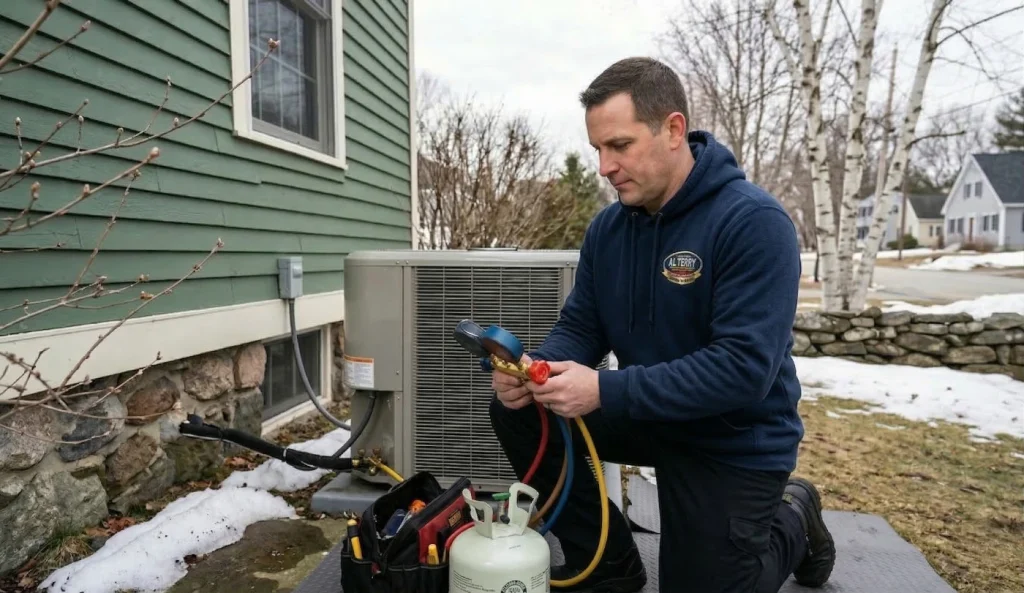
Why March Is the Smartest Time to Service Your AC in New Hampshire
Why March Is the Smartest Time to Service Your AC in New Hampshire Most homeowners in New Hampshire do not think about air conditioning in March. They are still thinking about snowbanks, muddy driveways, and one more spike in the heating bill. But that is exactly why March is such a smart time to look…

Our Commitment to Your
PEACE OF MIND
5-year warranty on all new installations
AND 2-year warranty on all repairs!