
 Get Pre-Qualified
 603.485.4205
  24/7 Emergency Service Request
 Low Water Pressure in Spring? 5 Plumbing Problems NH Homeowners Shouldn’t Ignore
When spring finally shows up in New Hampshire, most homeowners are ready to open windows, clean up the yard, and put winter behind them. But for your plumbing system, spring can be one of the toughest times of year.
As frost leaves the ground, snowmelt saturates the soil, municipal crews begin hydrant flushing, and aging plumbing systems start showing their weak spots. If your sinks, showers, or hose bibs suddenly seem weaker than usual, low water pressure may be more than just an inconvenience. It could be your plumbing system warning you that something needs attention.
Here are five plumbing problems New Hampshire homeowners should not ignore in the spring.
1. Well System Sediment and Pressure Tank Problems
If your home runs on a private well, spring thaw can stir up more than mud. As the ground shifts and aquifers recharge, sediment, sand, iron, and manganese can get pulled into your well system. That material can clog filters, affect pump performance, and leave your home with weak or inconsistent water pressure.
In some cases, the problem is not the well itself. A failing pressure tank or clogged pressure switch can cause the pump to short-cycle or delay turning on when your home needs water. Homeowners may notice pressure dropping suddenly in the shower, pulsing water flow, or the pump kicking on and off too often.
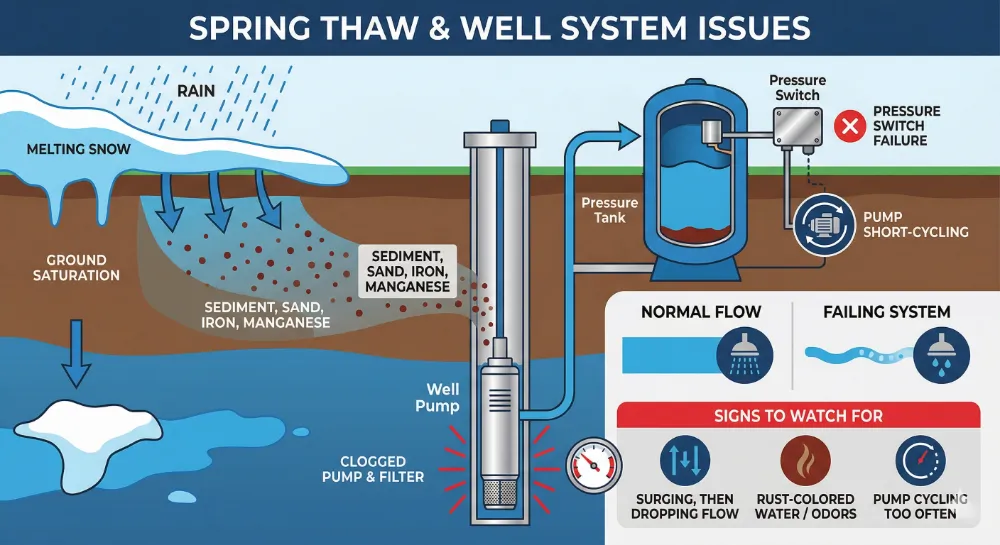
What to watch for:
- Water pressure that surges, then drops
- Rust-colored water or metallic odors
- Pump cycling on and off too often
- Periods of low flow or no water at all
If you have a private well and spring pressure problems show up out of nowhere, it is smart to have the system inspected before a small issue turns into a pump or tank failure.
2. Municipal Hydrant Flushing Can Push Sediment Into Your Plumbing
For homes on city or town water, spring often means hydrant flushing season. This maintenance is important, but it can temporarily stir up iron, calcium, manganese, and other debris inside municipal water mains. That sediment can move into your home’s plumbing and clog aerators, fixture cartridges, shut-off valves, and appliance screens.
A lot of homeowners notice this right away as brown or yellow water, but the bigger issue can come later. Even after the water clears, sediment may still be sitting inside fixtures and supply lines, reducing flow for weeks.
Signs this may be your issue:
- Pressure dropped shortly after hydrant flushing in your neighborhood
- Water looked brown, yellow, or rusty
- One sink or shower is weak, but others seem normal
- Washing machine or dishwasher performance changed suddenly
After flushing, it is often best to run cold water first and clean faucet aerators and showerheads if pressure stays low.
3. A Failing Pressure-Reducing Valve (PRV)
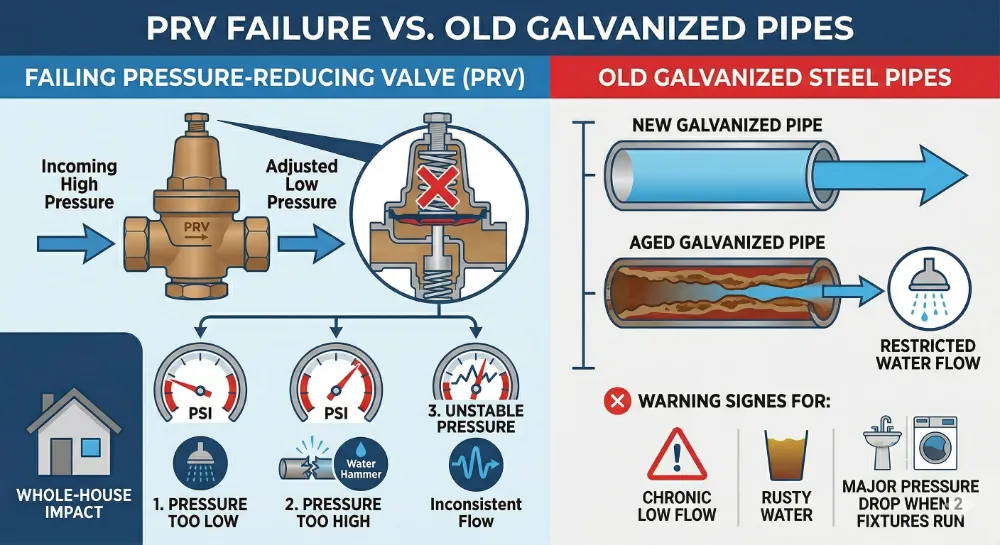
If your whole house has low water pressure and you are connected to municipal water, the problem may be your pressure-reducing valve, also called a PRV. This valve controls the pressure coming into your home from the street. When it starts to fail, the result can be weak water flow throughout the house.
In many homes, a failing PRV causes showers, sinks, and outdoor spigots to all lose strength at the same time. In other cases, a bad PRV can fail in the opposite direction and let too much pressure through, which can damage appliances, hoses, and fixtures.
Common clues:
- Low pressure at every fixture
- Pressure that changes unpredictably
- Water hammer or banging pipes
- Appliance hose leaks or unusually forceful flow
A pressure gauge test can quickly confirm whether your home’s incoming pressure is too low, too high, or unstable. Safe residential pressure is typically in the 40 to 60 psi range.
4. Old Galvanized Pipes Restrict Water Flow
Many older New Hampshire homes still have galvanized steel piping. From the outside, those pipes may look fine. Inside, though, decades of rust and mineral buildup can narrow the pipe so badly that water can barely move through it.
This is one of the most common causes of chronic low water pressure in older homes. Homeowners often describe it the same way: when they first turn on the faucet, water comes out strong for a second, then quickly drops to a weak trickle. That usually means the system has pressure, but not enough pipe capacity to maintain flow.
Warning signs include:
- Weak water flow in an older home
- Rusty water first thing in the morning
- Major pressure drop when two fixtures run at once
- Pressure issues that keep getting worse over time
Unfortunately, this is not a problem that vinegar, drain cleaner, or a quick adjustment can fix. If galvanized piping is the cause, repiping is often the real long-term solution.
5. Clogged Aerators and Showerheads
Sometimes the plumbing system is fine and the restriction is right at the fixture. Spring sediment, hard water minerals, and loosened debris can collect in faucet aerators and showerheads, making one sink or one shower feel much weaker than the rest of the house.
This is especially common after hydrant flushing or in homes with hard water. The good news is that this is often the simplest issue to fix.
You may be dealing with a fixture clog if:
- Only one faucet or shower has low pressure
- Pressure is good everywhere else
- The issue came on suddenly
- You can see buildup or debris in the aerator
In many cases, removing the aerator or soaking the showerhead in white vinegar can restore normal flow. If that does not solve it, the blockage may be deeper in the fixture or supply line.
When Low Water Pressure Is More Than a Minor Annoyance
Low water pressure is easy to brush off, especially during spring when so many things are changing around your home. But weak flow can point to bigger issues like failing well equipment, sediment intrusion, old galvanized piping, or a bad pressure-reducing valve.
The sooner the cause is identified, the easier it is to protect your plumbing system and avoid bigger repairs later.
Need Help Finding the Cause?
If your home’s water pressure has dropped this spring, Al Terry Plumbing and Heating can help diagnose the problem and recommend the right fix. Whether it is a well system issue, a clogged fixture, aging pipes, or a whole-house pressure problem, our team is here to help New Hampshire homeowners get their water flowing properly again.
Call Al Terry Plumbing and Heating today to schedule an inspection.
More Practical Home Advice You Can Trust
Our homes face unique challenges in New Hampshire’s climate. These articles break down heating, plumbing, and electrical topics in plain language—helping you understand what matters, what can wait, and how to protect your home through every season.
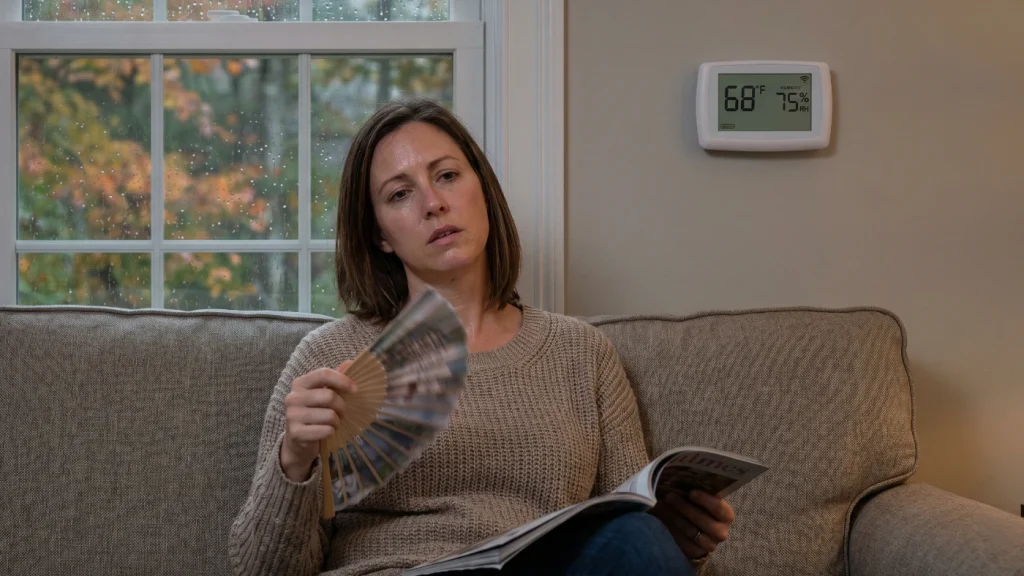
Why Your Home Feels Sticky When It Is Not Hot Outside
New Hampshire weather has a way of confusing your home’s comfort system One day it is cool enough to leave the windows closed. The next day the house feels damp, sticky, and uncomfortable — even though the thermostat says it is only 68 or 70 degrees inside. That is one of the most common shoulder-season…

Why Your Upstairs Is Always Hotter Than the Living Room
If you own a two-story Colonial in southern New Hampshire, this may sound familiar: The living room feels fine. The thermostat says the AC is working. But the upstairs bedrooms are still warm, sticky, and uncomfortable. By bedtime, the second floor can feel 6, 8, or even 10 degrees hotter than the first floor. The…

Ductless Mini-Splits for Older NH Homes Without Ductwork
Older New Hampshire homes have a lot of character. They also have a comfort challenge. Many Colonials, Capes, farmhouses, and mid-century homes were built around boilers, radiators, or hot-water baseboard heat. Those systems can keep a home warm, but they were not designed for central air conditioning. In many older homes, there simply is not…
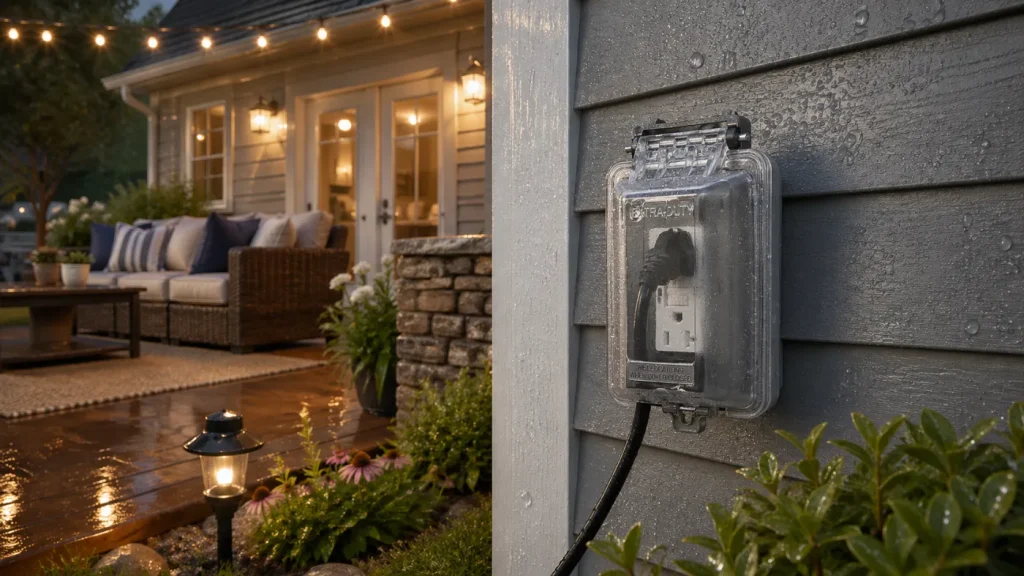
Outdoor GFCI Outlets: Why Weatherproof Protection Matters for NH Homes
Outdoor power is something most homeowners use without thinking much about it. You plug in holiday lights. Run a power washer. Charge yard tools. Power patio speakers. Use landscape lighting. Maybe you have an outdoor kitchen, pool equipment, irrigation controls, or smart devices around the house. But outdoor electricity has to deal with conditions indoor…
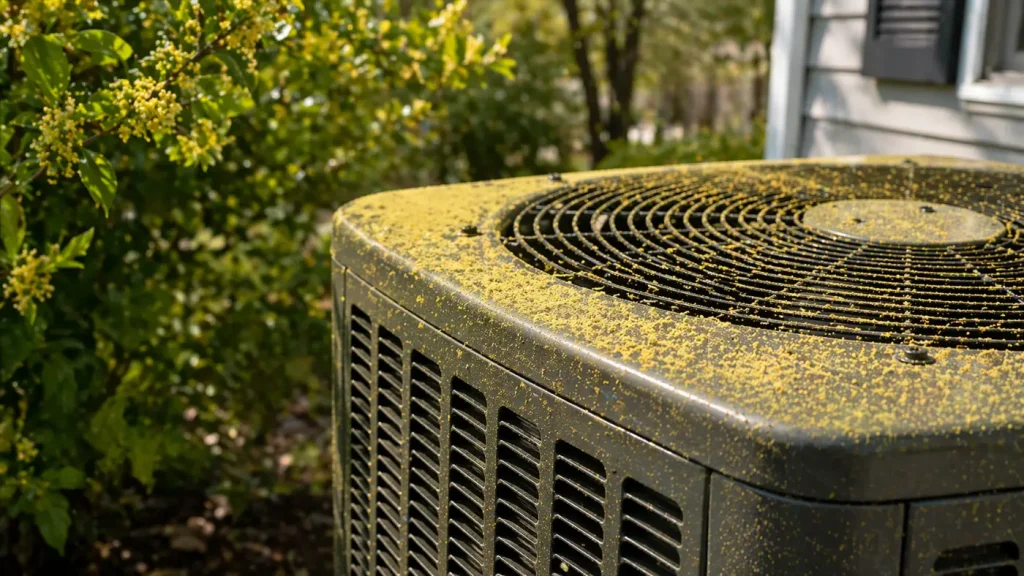
Why NH Pollen Is Hitting Your HVAC System Harder This Year
If it feels like pollen season is worse than usual this spring, you’re not imagining it. Across New Hampshire, homeowners are dealing with heavy tree pollen from oak, maple, and ash. Most people think of pollen as an allergy problem. Sneezing, itchy eyes, congestion. But what many homeowners do not realize is that pollen can…
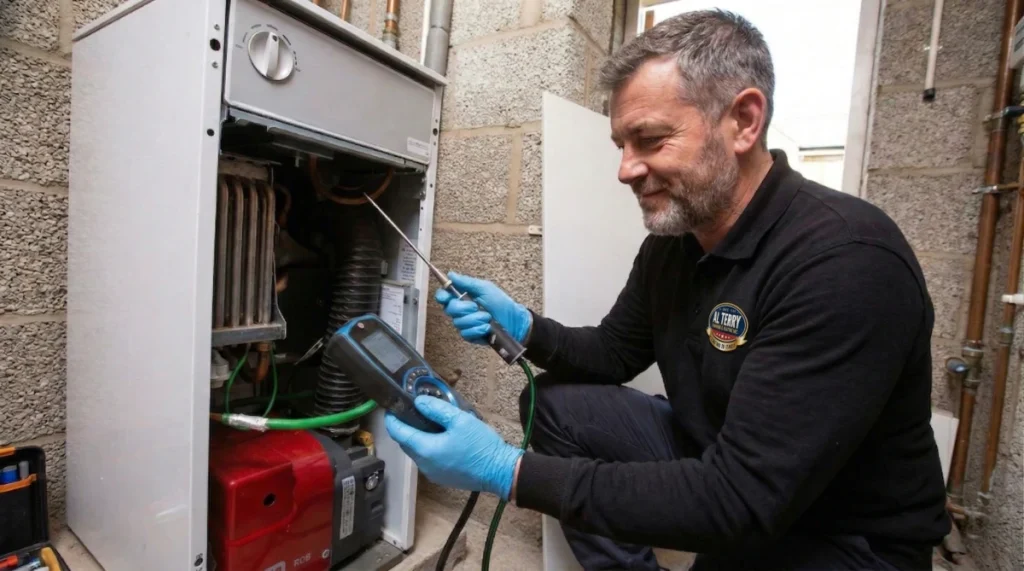
Should You Shut Your Boiler Off for Spring in NH?
When the weather starts warming up in New Hampshire, a lot of homeowners start asking the same question: Should I shut my boiler off for the season, or leave it running? The honest answer is that it depends on your system. For many homes, mid-to-late April is the right time to stop using the heating…

Tired of High Electric Bills in Southern NH? Start With These Smart Upgrades
If your electric bill in Southern New Hampshire has been climbing, you are not imagining it. Between high regional electricity costs, older homes that leak heated or cooled air, and HVAC systems working harder than they should, many homeowners are paying more every month than necessary. The good news is that lowering your bill does…
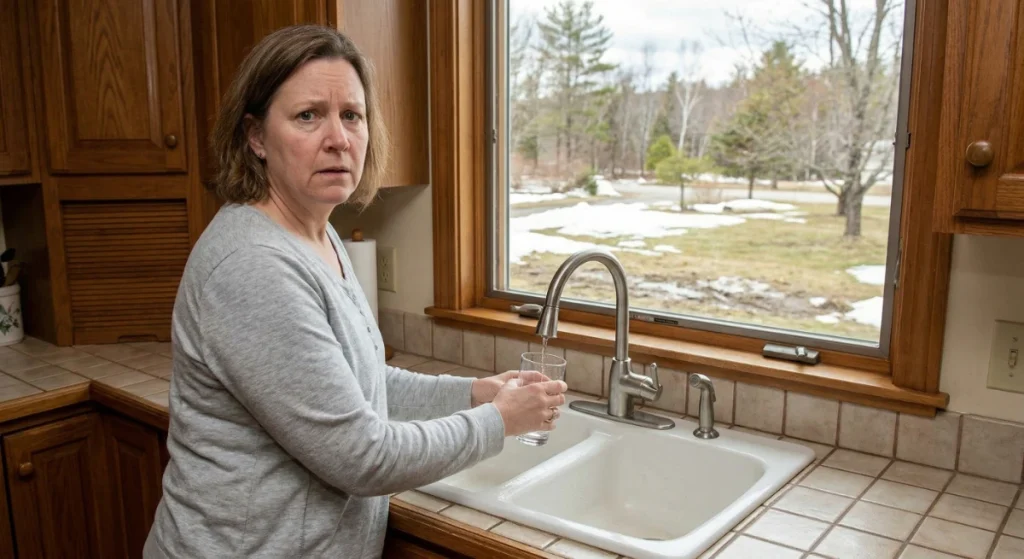
Low Water Pressure in Spring? 5 Plumbing Problems NH Homeowners Shouldn’t Ignore
When spring finally shows up in New Hampshire, most homeowners are ready to open windows, clean up the yard, and put winter behind them. But for your plumbing system, spring can be one of the toughest times of year. As frost leaves the ground, snowmelt saturates the soil, municipal crews begin hydrant flushing, and aging…

How Your HVAC and Plumbing Systems Can Help Fight Spring Allergies
Spring is a welcome change in Southern New Hampshire. The snow melts, the windows start to open, and the air finally feels lighter. But for many homeowners, spring also brings sneezing, congestion, itchy eyes, and poor indoor air quality. Most people think of spring allergies as an outdoor problem. In reality, your home’s HVAC and…
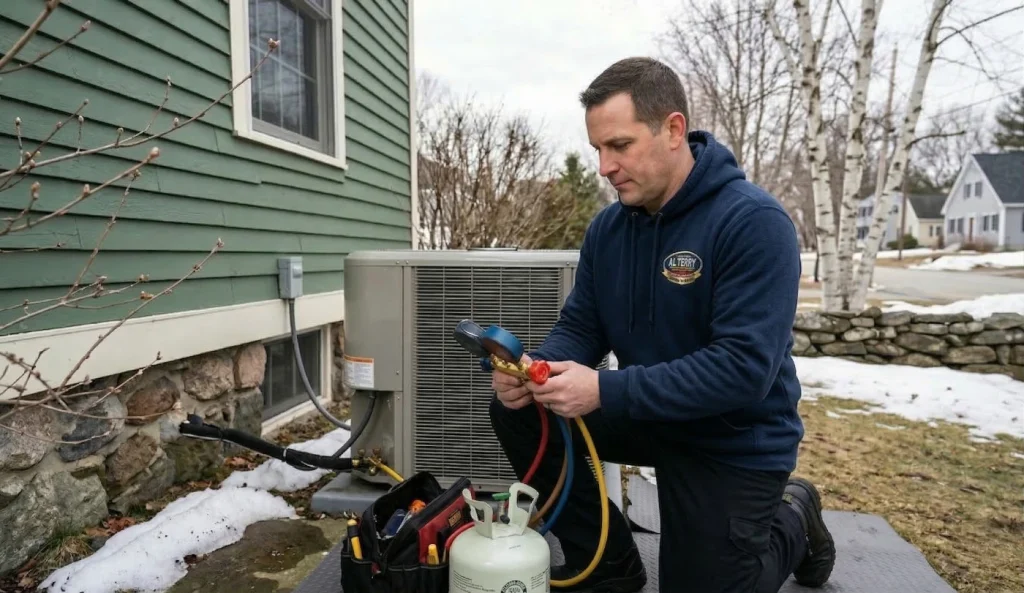
Why March Is the Smartest Time to Service Your AC in New Hampshire
Why March Is the Smartest Time to Service Your AC in New Hampshire Most homeowners in New Hampshire do not think about air conditioning in March. They are still thinking about snowbanks, muddy driveways, and one more spike in the heating bill. But that is exactly why March is such a smart time to look…

Our Commitment to Your
PEACE OF MIND
5-year warranty on all new installations
AND 2-year warranty on all repairs!