 603.485.4205
 24/7 Emergency Service Request

Why We Trust Bryant HVAC Systems for NH Homes | Al Terry Plumbing
When you’ve been in New Hampshire homes for fifty winters, you learn quickly that “good enough” equipment isn’t good enough when it’s 10°F outside and the wind is rattling the windows. Home comfort here is a reliability problem first, an efficiency problem second, and a convenience problem third.
That’s why at Al Terry Plumbing & Heating, we’re selective about the brands we recommend and install. Bryant has been a standard-bearer in HVAC for more than a century—and that long track record shows up in the places homeowners care about most: lower operating costs, quieter comfort, fewer surprises, and stronger warranty protection.
This is our “Trusted Partner Spotlight” on Bryant—what makes the equipment different, and what that means for your home.
A brand built on fundamentals, not shortcuts
Bryant’s story starts in the early 1900s with Charles Bryant and the earliest days of gas regulation and central heating. That history matters for one reason: Bryant grew up solving real-world problems—system stability, safety, and dependable performance—long before HVAC was a commodity product.
Over the decades, Bryant has consistently pushed two things that still matter today:
- Efficiency that’s measurable, not theoretical
- Reliability that’s proven under real operating conditions
That’s the same mindset we’ve built Al Terry on since 1976: do it right, stand behind it, and make sure it works when the weather is at its worst.
What Bryant delivers for homeowners
Industry-leading efficiency (without sacrificing comfort)
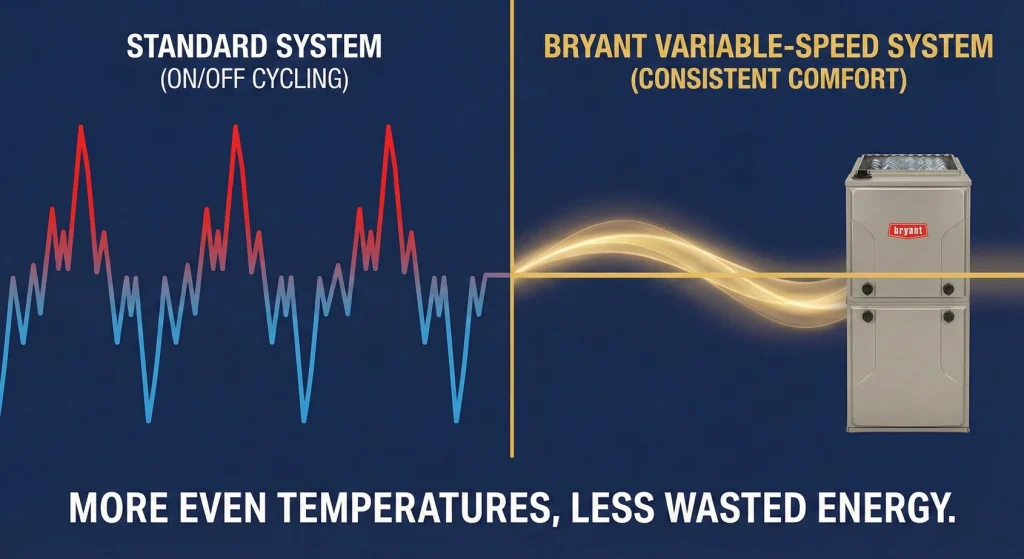
Older systems tend to run in a simple pattern: full blast, then off. That “on/off” cycling is hard on equipment and often leaves you with temperature swings—too warm, then too cool—especially in older New Hampshire homes with uneven insulation.
Many Bryant systems (especially in the higher-tier lines) use variable-speed and inverter-style operation, which means the system can run at lower output for longer periods. The payoff is real:
- More even temperatures from room to room
- Better humidity management in summer
- Less wasted energy from constant starting and stopping
In plain terms: you’re paying for comfort you actually feel, not just a number on a brochure.
Ultra-quiet operation you notice right away
Noise is one of the most common “I didn’t think about that” regrets with HVAC—especially if you use your yard, have a patio near the condenser, or your bedroom sits above a mechanical room.
Bryant designs include sound-dampening features that reduce vibration and air turbulence. The difference is simple: a well-designed system fades into the background. You get heating and cooling without the constant reminder that machinery is running your home.
Exceptional reliability, backed by real testing
Here’s a behind-the-scenes detail most homeowners never hear: Bryant run-tests every unit before it leaves the factory. That’s a big deal. It reduces the odds of an out-of-the-box issue and helps ensure the system performs the way it’s supposed to from day one.
They also test components for harsh environments—important for homeowners in coastal areas and anywhere winter weather is hard on equipment. Reliability isn’t a single feature; it’s a discipline. Bryant treats it that way.
And from our side, that means fewer callbacks, fewer disruptions, and a better ownership experience.
Best-in-class warranties (and what they really mean)
A warranty is only as good as two things: the manufacturer’s policy and the quality of the installation.
Bryant offers strong coverage—often 10-year parts warranties when registered on time, and in certain product tiers, enhanced protection that can include unit replacement provisions. Those aren’t marketing perks. They’re risk reduction for homeowners making a major investment.
Two important truths we always share:
- Registration matters. Miss the window, and coverage can drop.
- Installation quality matters more than brand. The best equipment in the world can be undermined by poor sizing, duct issues, or sloppy setup.
That’s why we treat every installation like it has to last—because it does.
Why “trusted partner” matters more than “top brand”
There are plenty of HVAC logos out there. What homeowners really need is a pairing that works:
- a manufacturer with consistent engineering and support
- and a local team that knows how to design, install, and maintain the system for New Hampshire conditions
Bryant builds the equipment. Al Terry Plumbing & Heating makes sure it’s matched to your home, installed correctly, and supported long after the check clears.
Your next step: choose the right system for your home, not the trend
If you’re thinking about replacing a furnace, AC, or heat pump, the most important decision isn’t the brand—it’s getting the system sized and designed correctly for your house and your comfort priorities.
If you want an honest recommendation (including where a premium system makes sense—and where it doesn’t), call us at 603-485-4205. We’ll walk you through options, trade-offs, and what long-term ownership typically looks like in Southern New Hampshire.
And if you like staying ahead of breakdowns with priority scheduling and preventative service, ask about our Diamond Club membership.
More Practical Home Advice You Can Trust
Our homes face unique challenges in New Hampshire’s climate. These articles break down heating, plumbing, and electrical topics in plain language—helping you understand what matters, what can wait, and how to protect your home through every season.

Clocks Go Back November 1: 8 Home Checks Before a New Hampshire Winter
At 2 a.m. on Sunday, November 1, the clocks fall back an hour. Sunset in Southern New Hampshire lands around 4:40 that afternoon, keeps sliding toward 4:10 by mid-December, and does not get back past 5 o’clock until February. The dark half of the year is here. Fire departments have been telling people for thirty…

How Low Should You Set Your Thermostat This Winter?
With heating oil hovering around $6 per gallon in New Hampshire, plenty of homeowners are looking at the thermostat differently this fall. Do you keep the house at 68°F and absorb the higher heating bill? Drop it to 60°F and put on another sweater? Turn the heat down even farther while everyone is at work?…

E-Bikes, Tools and EVs: Is Your Home Wired for Today’s Charging Loads?
E-bikes, scooters, cordless tools, lawn equipment, laptops and electric vehicles all need to charge. As more of these devices enter our homes, home battery charging safety is becoming an important electrical issue for New Hampshire homeowners, especially in garages and mudrooms wired decades ago. That makes this year’s Fire Prevention Week especially timely. The 2026…

Why Your New Hampshire Home Needs Whole-House Surge Protection
Homes have changed. Today, even everyday household equipment depends on electronic controls, circuit boards, sensors, variable-speed motors, Wi-Fi connections, and digital displays. Your heating system may have an electronic control board. Your refrigerator has one. So do many water heaters, washing machines, ranges, televisions, well systems, heat pumps, mini-splits, garage door openers, and smart-home devices.…

Heating Oil Prices Are Up: 7 Ways NH Homeowners Can Improve Boiler Efficiency
When heating oil prices rise, New Hampshire homeowners feel it quickly. But replacing your boiler is not the only way to lower heating costs. An oil-fired heating system that is dirty, poorly balanced, or struggling to move heat through the house may burn more fuel than necessary. A few maintenance steps and targeted improvements can…

How to Winterize a Seasonal Home in New Hampshire Before the First Deep Freeze
Seasonal homes, camps, lake houses, and cottages are part of life in New Hampshire. They also have to withstand long periods of freezing temperatures, snow, ice, and winter power outages. When a home sits empty through winter, even a small amount of trapped water can turn into cracked pipes, damaged pumps, ruined fixtures, septic problems,…

Why a Pre-Winter Heating Tune-Up Matters for New Hampshire Homes
New Hampshire winters do not give homeowners much room for error. When the temperature drops, your heating system has to do more than keep the house comfortable. It also helps protect your plumbing, your indoor air, your fuel budget, and your home itself. That is why a pre-winter heating tune-up is one of the most…

Why Is My Boiler Running in the Summer? Understanding Indirect Hot Water in NH Homes
It is 80 degrees outside, your thermostat is not calling for heat, and then you hear the boiler fire up in the basement. For many New Hampshire homeowners, that seems strange. Why would the heating system run in July, August, or September when the house does not need heat? In many homes, the answer is…

Single-Zone vs. Multi-Zone Mini-Splits: Which Is Better for Your NH Home?
Mini-splits can be a great fit for New Hampshire homes, especially older houses without ductwork, finished basements, bonus rooms, additions, upstairs bedrooms, and homes with hot water baseboard heat. But one of the most important decisions happens before installation: Should you choose a single-zone mini-split or a multi-zone mini-split? The answer depends on your home’s…

PFAS Water Filter NH: What Well Owners Should Know
PFAS contamination has become a major water quality concern for many New Hampshire homeowners, especially families who rely on private wells. People often call these chemicals “forever chemicals” because they do not break down easily in the environment. For homeowners, the hardest part is knowing what to do next. Should you test your well? Should…
Our Commitment to Your
PEACE OF MIND
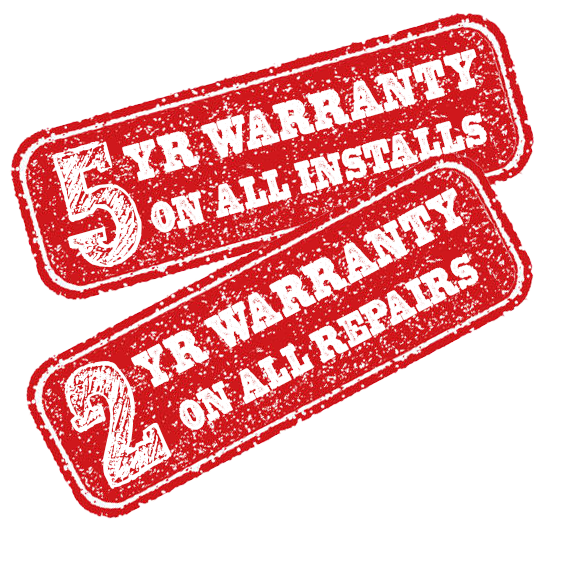
5-year warranty on all new installations
AND 2-year warranty on all repairs!